
For Fellowes, the workplace is becoming more than a collection of individual products. It is an interconnected environment in which air quality, acoustics, light, privacy, flexibility and aesthetics all contribute to how a space functions and how people experience it.
That broader perspective is reshaping how the company approaches product development, portfolio strategy and its relationships with the design community. By bringing together businesses with expertise in air purification, architectural walls and workplace accessories, Fellowes is building a workplace portfolio that begins with the needs of the environment rather than the boundaries of individual product categories.
“We had to really step back and say, ‘Okay, how do our modular walls business, our workplace accessories business, and our air quality management business all fit together?’ And this emerging concept of indoor environmental quality really became obvious to us,” said Pete Scheidler, General Manager of Interiors at Fellowes.
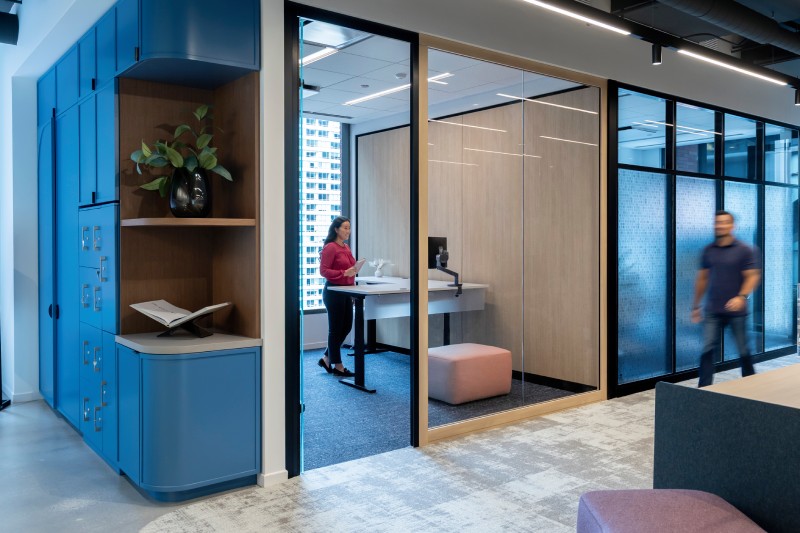
The company’s move toward that integrated approach accelerated in 2025, when it brought its businesses together under one division. Previously, its air purification operation functioned independently from its contract interiors businesses, which included ESI and Trendway. Each had its own portfolio, customers and market perspective.
Bringing those capabilities together created an opportunity to reconsider how the products could work collectively to address the performance and experience of an entire workplace. “It has immediately shaped both our existing product portfolio and how we present our products,” Scheidler said. “For indoor environmental quality, how do we develop solutions that work together to serve that as a whole? That’s clearly our number one focus.”
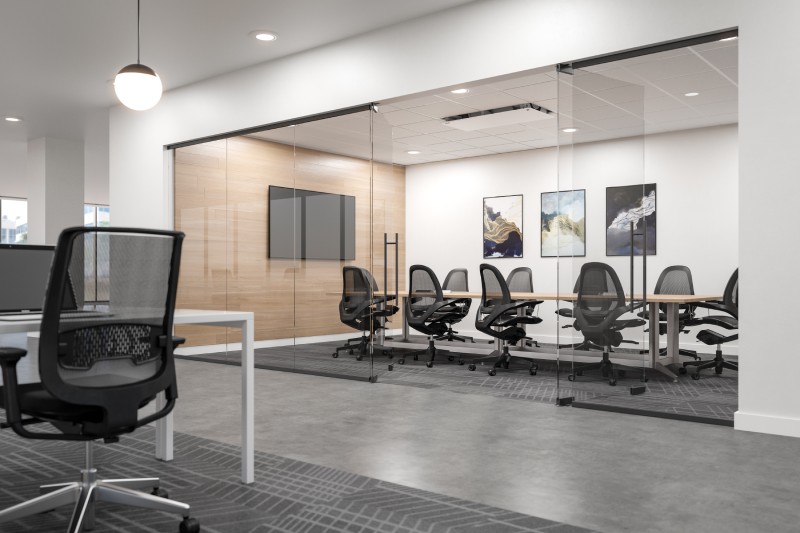
The distinction is important in an industry that often organizes its thinking around products. Manufacturers develop and market individual solutions, while designers and clients must determine how those products combine to create an environment that meets the project’s goals. Fellowes sees an opportunity to reverse that sequence: establish the desired outcome, then develop and position products to support it.
Fellowes is in a position to shape that conversation as its portfolio continues to develop. Rather than relying exclusively on an established product collection, the company can use its indoor environmental quality mission to guide future offerings and determine how they work together.
That strategy is already influencing two areas of development. On the air quality side, Fellowes is advancing integrated purification solutions designed to become a more complete part of a building’s air-handling system. On the furnishings side, it is emphasizing configurability and customization, giving customers more flexibility while maintaining the company’s ability to deliver products quickly.
The air quality initiative reflects a growing recognition that healthy indoor environments require more than simply bringing additional outdoor air into a building. Ventilation remains essential, but outdoor air can also introduce contaminants, while conditioning that air can place additional demands on heating, cooling and dehumidification systems.
Scheidler said Fellowes is developing solutions that address those competing considerations, helping building owners manage indoor contaminants while considering energy consumption and operating costs. “The big opportunity for building owners and occupants within it is for us to balance that environment,” he said.
That thinking extends the company’s role beyond supplying a standalone air purifier. It positions air quality as one component of a larger building system, with implications for occupant health, facility performance and the overall workplace experience.
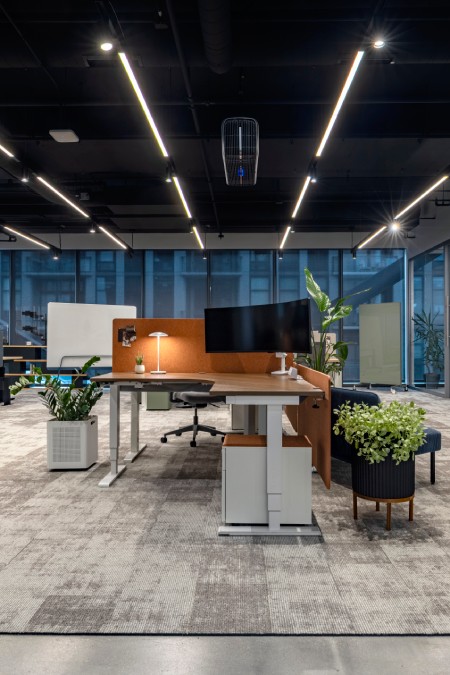
Meanwhile, its contract furnishings portfolio continues to evolve around the needs of individual users and projects. Fellowes is working to give customers more choices in how products are configured, moving beyond standardized offerings without abandoning the inventory and delivery capabilities that have helped define the business. Scheidler said that balance will remain central as the company introduces new products and expands its portfolio.
Design thinking provides the connective tissue across these initiatives. Fellowes has an in-house industrial design team and works with both its internal design support team and members of the broader design community to understand how products should look, function and interact. Those relationships inform more than the appearance of individual products. They help the company understand how designers want to configure products, what project requirements must be addressed and how products can support a particular design vision.
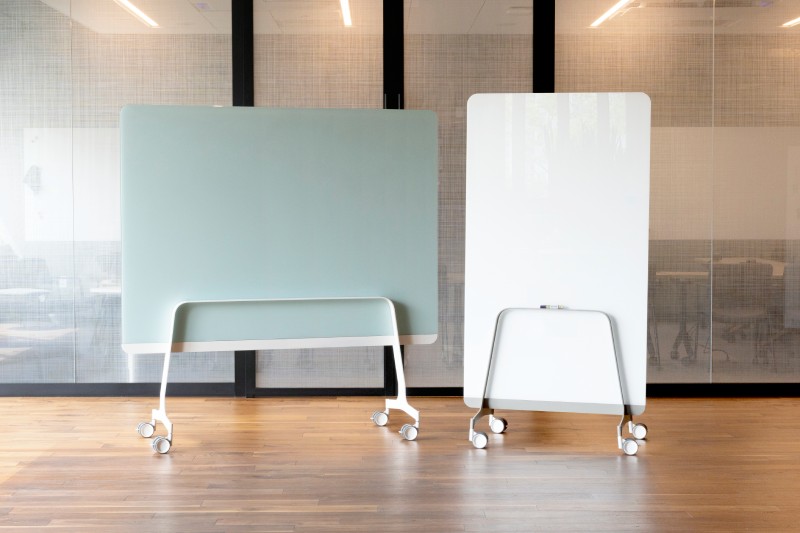
“We are incorporating needs and understandings and desires from that group, both in how we design and develop, so how the products configure and work together to bring their design inspiration to life, but then also having a very distinct design language that we are really starting to build and cultivate,” said Scheidler.
The emerging design language is intended to create greater consistency across the portfolio. As Fellowes develops products across categories, the goal is to establish a recognizable approach that connects visual design with how products are engineered and used. “Those both have to come together to be effective,” he said.
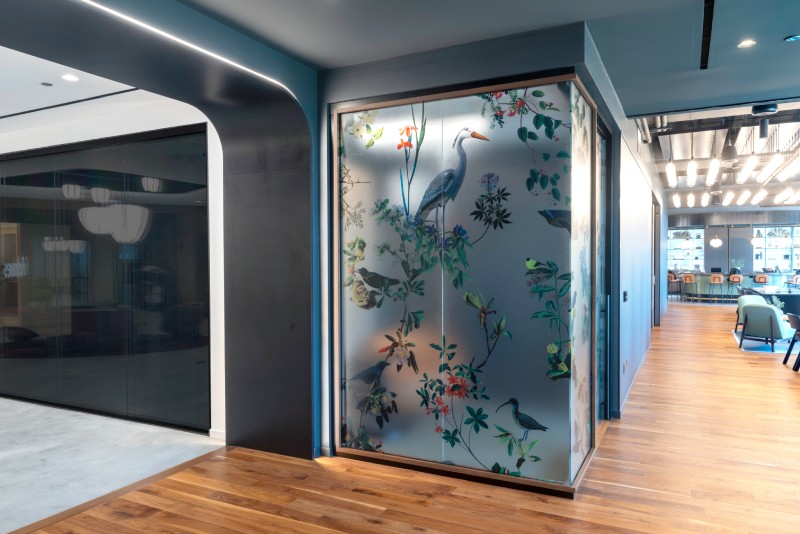
The company’s Chicago showroom offers a tangible demonstration of that philosophy. Rather than presenting products as isolated pieces, the space allows designers to experience how different ideas and products can combine to shape an environment. Architectural wall systems, for example, can influence privacy, light transmission and acoustics while establishing the visual character of a space. Different glazing and material selections allow designers to determine how much light passes through an environment, where sound is absorbed or blocked, and how individual areas relate to one another. Those decisions affect the experience of the entire space, not just the performance of a wall system.
Called the Design & Experience Center, Scheidler said it goes beyond a traditional showroom. It’s an immersive space where designers can experience the form, function and versatility of Fellowes products firsthand, explore how materials and finishes work together and discover new possibilities for their own projects. More than a place to view products, he said, it’s an environment designed to spark ideas, encourage exploration and inspire thoughtful design.
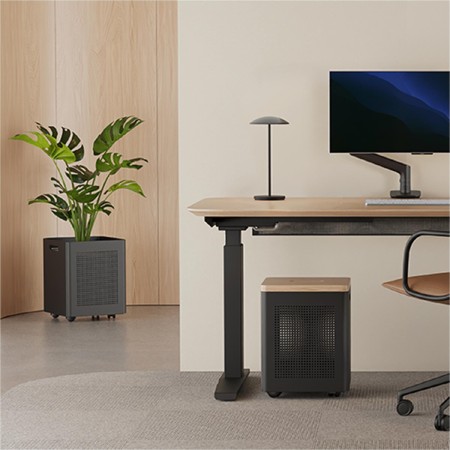
The showroom allows designers to see how materials, architectural elements and products work together in a real setting, helping translate design intent into practical solutions. “Having the opportunity to walk that space in an environment that doesn’t feel like a catalog really allows you to see how these things work in real life,” said Scheidler.
That connection between design intent and practical application is central to Fellowes’ broader strategy. The company is working to make its portfolio more than a collection of products that happen to share a corporate identity. Its objective is to develop solutions grounded in a shared understanding of how workplaces function and how their individual elements contribute to the whole.
The approach also gives Fellowes a framework for future development. As the company expands its offerings, indoor environmental quality provides a way to evaluate new opportunities, connect product categories and keep the focus on the needs of the people who use the spaces.
For designers, that creates a different conversation with a manufacturer: one that begins with the desired environment and considers how multiple solutions can help achieve it. Fellowes is still developing that vision, but Scheidler said the direction is becoming clearer. The same objective is increasingly shaping its portfolio, design language and relationships with the design community.
The result is a company looking beyond individual products to consider how design decisions work together — and how those decisions can create healthier, more functional and more thoughtfully designed workplaces.