
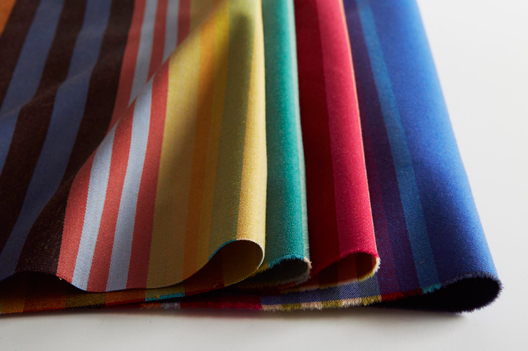
Designtex is pleased to announce that the Cooper Hewitt, Smithsonian Design Museum has accepted into its permanent collection seven Designtex textile designs, joining two Designtex wallcoverings already in the museum’s collection. As a group, these textiles reflect Designtex’s commitment to the craft of textile production, its interest in technological innovation in the development of new kinds of materials and new techniques of textile construction, its dedication to introducing more sustainable products into the marketplace, and its long history of collaboration with leading designers to produce pioneering surface solutions.
Matilda McQuaid, Deputy Director of Curatorial and Head of Textiles at the Cooper Hewitt, Smithsonian Design Museum, noted that the museum only rarely accepted such a large selection of textiles from an individual company. McQuaid observed: “One of the greatest challenges in designing commercial textiles has been creating durable, cleanable, affordable, and aesthetically pleasing fabrics for highly trafficked and 24/7 environments like healthcare facilities, theaters, and airports. In addition, there is more demand for textiles with sustainable manufacturing practices, and companies like Designtex are taking on this responsibility and producing some very innovative fabrics.”
The range of Designtex textiles newly added to the Cooper Hewitt’s collection—Clerkenwell, Myddleton, Chiyogami, Radar, Loop to Loop, Shibori Stripe, and Hint—reflects an overarching consistency of vision in the company’s commitment to innovation that finds expression through a diversity of aesthetic approaches and material explorations.
Clerkenwell and Myddleton (upholsteries, 2014) were developed in collaboration with UK based textile designers and expert weavers Emma Sewell and Harriet Wallace-Jones, and use wool—one of the oldest materials employed in the history of textile production—to create large-scale designs of stripes, grids, and oversized weaves that find inspiration in the highly disciplined color explorations of seminal modernist textile designer Anni Albers. The duo’s mastery of weaving technique and bold colorwork is particularly evident in Clerkenwell, which features a continuous planted warp stripe running vertically on the roll, with each colorway showcasing upwards of a dozen hues.
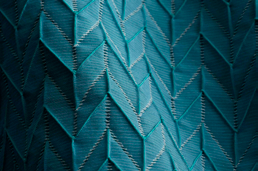
Chiyogami (panel fabric/drapery, 2014), designed by Tobias Batria, pushes forward the possibilities of what can be achieved with the loom: woven with a unique production and finishing process to create its origami-inspired pleats, the result is a three-dimensional textile with striking structural qualities. Beyond the aesthetic appeal of its distinctive form, when installed as a drapery the fabric’s regular angled surfaces are engineered to provide acoustic absorption.
Radar (upholstery, 2015) continues a long-running collaboration between Designtex and designer Nancy Guay Giesberger that reaches back to 1994, with the launch of Hardwear, an innovative extreme performance wallcovering. Taking as a starting point a PVC-coated polyester yarn that was originally used in geotextiles to mitigate erosion in road beds, Hardwear’s ground-breaking construction utilized a modified version of these yarns in the weft to produce an exceptional level of durability. Radar represents the latest iteration of Hardwear, now utilizing solution-dyed nylon in the warp to give the new construction additional resilience; in addition, the PVC-coated weft yarns have been re-engineered to clear them of phthalates, harmful chemicals which are typically found in the manufacturing of PVC.
Loop to Loop (upholstery, 2013) is the result of an unprecedented collaboration amongst players all along the textile supply chain: Designtex partnered with Steelcase, Canadian textile manufacturer Victor, and Unifi, the maker of the recycled fiber REPREVE, to create the first upholstery fabric to be made from “recycling recycled” panel fabric. Loop to Loop utilizes cutting waste from Steelcase furniture, most of which was already post-consumer recycled fabric made from PET water bottles. This waste is recycled again into “new” polyester yarn that is used to weave Loop to Loop—which is itself designed and manufactured with an eye to future recycling through the same closed-loop process.
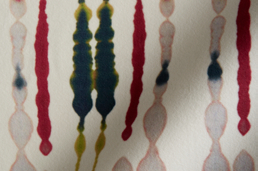
Shibori Stripe (upholstery, 2015) takes its inspiration from nui shibori, a stitch-resist form of the ancient Japanese shibori tie-dyeing technique, where sections of cloth are gathered together with a running stitch before being dyed. The design takes advantage of the unique qualities of digital printing to explore new possibilities in textile production, as this technology effortlessly captures the subtle color effects of natural dyes on cloth.
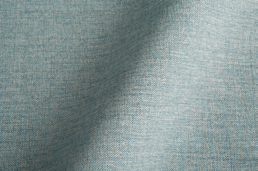
Hint (upholstery, 2016) utilizes specially engineered yarns to create an appealing fabric that combines a soft hand and complex colors, with the robust performance required for high-traffic environments, such as healthcare settings. Importantly, Hint achieves its durability without necessitating additional finishes, making it compliant with the chemical guidelines of leading organizations including Healthier Hospitals. Hint will enter the museum’s collection in the form of a “color blanket”—an artifact from the development process that is produced by the mill to enable the designers to approve a final selection of colors before the fabric goes into production. The color blanket is a beautiful object in itself, but also represents the core principle that the process of production is as relevant to telling the story of contemporary design as the final textile.
Susan Lyons, President of Designtex, welcomed the addition of the designs to the museum’s collection: “We are honored and delighted that the Cooper Hewitt, Smithsonian Design Museum will add seven of our textiles to its permanent collection. Taken together, these designs offer a superb portrait of what Designtex represents and our values as a company—striving to develop more sustainable solutions for our industry, exploring the craft principles of traditional textile production as well as embracing technological innovations in the creation of new kinds of materials, and last—but by no means least—our rich history of working with leading designers to fabricate cutting-edge products that are both beautiful and functional.”
About Designtex
Designtex is the leading company in the development, design and manufacturing of applied materials for the built environment. For over fifty years, Designtex has been providing innovative materials to customers around the world. Throughout each step of product development and manufacturing, Designtex strives to ensure their textiles, wallcoverings and digitally imaged materials have a reduced environmental impact. Designtex is a Steelcase company, headquartered in New York City, with over 100 national and international locations. For more information, please call 800.221.1540 or visit designtex.com.