
Transitioning seasons this fall ushered in a bold change to the fabric of Maison & Objet’s September edition, one that also impacts its January installment. Attendees have noted a shift, in place for at least two years, when familiar features like Rising Talents were scaled back to annual events. The show’s orientation also began morphing, with more experimental approaches to the usual trend presentations that are so beloved.
It’s definitely more edgy. And that is exactly the point. Maison & Objet PULSE debuted, with a spotlight on young creatives and experimentation, alongside some familiar brands. January’s edition is rebranded as Maison & Object Premier, where high end furniture, architectural projects, hospitality and living space again will be in the spotlight.
This all comes as design shows continue to lose traction. Although attendance from last year actually climbed to 61,000, a 19% increase, in recent years there has been a noticeable decline in vendors, this time 1,700, a 20% dip. This is a trend affecting most trade shows since the pandemic. Only four halls (once eight) were open, with some noticeably smaller footprints.
That said, there was much to see. The anchor installation, Feel the Shift, takes on AI, celebrating a return to emotion, human connection and sensory experiences. It’s the creation of the Valencia-based design duo Masquespacio, known for their colorful designs and furniture from their company Mas Creations. Whether or not you like their style, there were some special design takeaways. For one, a kitchen design in their space featured a radiused table, with counter made up of stone offcuts in different patterns. The legs are built from stacked pieces. The walls and “stove hood” were clad in floral patterned and striped grasscloth (all their design). Bench seating was made cozier with seat and back cushions. Bedding was luxe and layered.
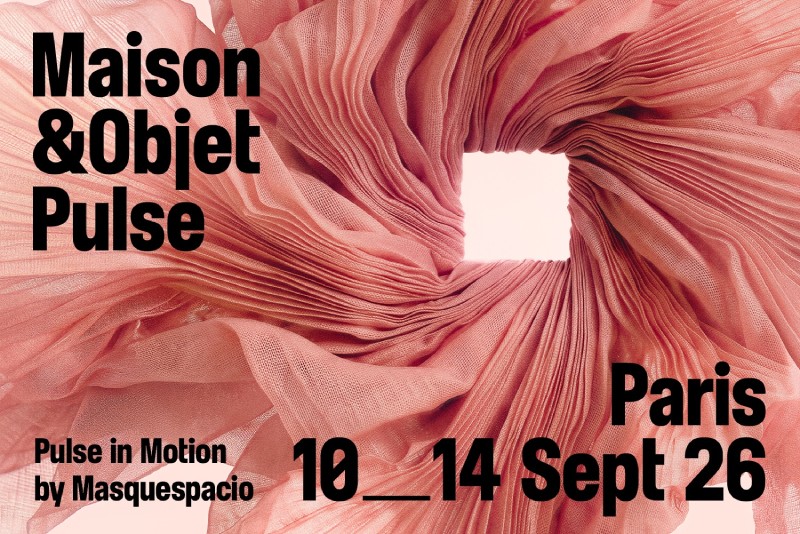
Christopher Penasse, who with his wife Ana Milena Hernandez recently took a one-year sabbatical to Bali, described how the design suits the Pulse in Motion theme. The two also created the new logo, one reflecting materiality and tactility with gathered sheer pleated pink fabric.
“Our projects were a bit more vivid before, when we were younger,” said Penasse. “Now we’re getting older and the palette is quieter. Still very contrasty. Maybe still, we want to be young with pastel pink. It’s finding balance. Also, a very nostalgic approach—very modem but very traditional.”
It is also sustainability minded. “The (kitchen) table is made of waste marble. A lot of industrial companies in Spain come to us and want to do something ecological. This is done without glue. Perhaps 40 different patterns,” he said.
And that ornamental apron is structural — like dowels in wood with no glue. Benches are topped with fluffy seat and back cushions made of tactile materials like velvet, printed with a tone-on-tone pattern of wood. “We need the texture,” said Penasse. “It’s very human, more natural Here, the idea was to create a welcoming space.”
The creation also echoes the warming up of contract design, one that ties it more to residential spaces. Macquespacio designs many commercial spaces, especially restaurants.
Textiles and texture have been important to the craft movement, which has become a big influencer. Fine Craft Métiers d’Art is front and center in Hall 5, dedicated to works in ceramic, glass, wood, metal, beadwork and embroidery. Just as we’ve seen at major design shows this year, from Salone del Mobile to Chicago Design Week, almost every brand is leaning into the hand crafted. At the Kimball showroom at Fulton Market in June, a generously curved Entourage lounge sofa arm sported hand-embroidered flowers, done on site.
The creative potential and typologies of materials were exposed in the In Materia exhibit, curated by Elizabeth Leriche. The selection of crafts was grouped: Terra (raw earthy, clay); Germa (roots and woven fibers with an organic vitality); Fusio (the metamorphosis of fire and how heat cracks, oxidizes and transforms surfaces); and Crypta (the hidden poetry of stones, caves, underground worlds).
Craft also reigned where the spotlight turned to South Africa, for the first time honoring seven Rising Talents and revealing sophisticated designs and beautiful craftsmanship in wood, lighting and weaving, inspired by culture and tradition.
Future on Stage also brought to the fore the specialties of three design studios. We were introduced to an unusual process for Baguette Studio in Einthoven during Dutch Design Week last year. The designers used a custom rotational moulding machine to melt and heat beeswax and plant-based wax, turning it into a liquid translucent state. Then it’s poured into a custom-built mold to create sustainable, recyclable lighting.
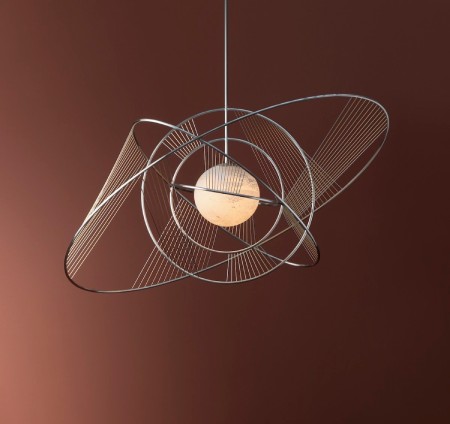
And 25-year-old Adele Goulet created intriguing lighting with an Art Nouveau vibe. It included a simple bulb with a delicate metalwork cage that looked like textile. She brazed brass onto thin copper rods, hand hammering it to smooth the joints, then wove and embroidered thread onto the open sections of the frame.
The Design District was another effort to concentrate high-end and innovative design. Ola Szewczul, a Polish designer known for her reimagining of mid-century modern furniture with beautiful textiles from Italian brands like Dedar, pushed the envelope with her newest chair. The Vintola Studio dining chair comes in a bold ocean blue hand-tufted chenille. The highly tactile, sculptural upholstery has deep fringe and brass metal legs with whimsical back-turned “feet,” a collab with a Polish metal company Pap Deco.
One category to watch is audio speakers. A ramped up global trend for listening bars has us paying more attention to the design. One cool display was found in the South Korean Olim speaker, an eco-friendly passive wooden smartphone amplifier by Studio Oll & All. It was inspired by the acoustic principles of a traditional Korean sound box. Also, Erwan Bourellac’s Music Studio sound system for Samsung, shown at Bon Marché fit the trend as well. The sculptural pieces are built from high-quality matte plastic.
Weaves in all materials also are gaining momentum. The Greek luxury brand V & V is known for its sophisticated applications of macrame to furniture, pavilions and bars, that translate well to the hospitality sector.
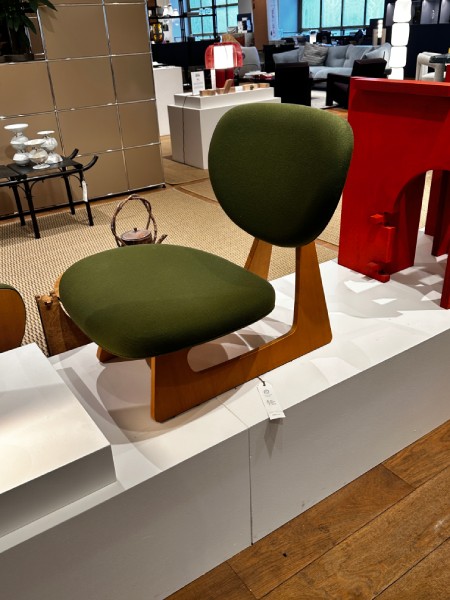
Color certainly abounded, unlike the January show where trend watchers complained about everything beige. For the most part, furniture palettes were richer and more autumnal, with a prevalence of olive green, merlots and aubergine that have become staples. The brighter hues, on the other hand, provided more pop in accessories like pillows, tabletops (as at Serax) and lighting.
In surface finishes, texture has grown in importance as well, with glossy on the rise, and raw natural materials with lots of raffia and woven organics. This is especially true in lighting, which is a story in itself. Shape is attracting attention, as are materials. Lamp shades have gone beyond basic white, with unusual materials, patterns and form that are more integral to the overall design.
3D printing continues to evolve, with established brands like Sheyn continuing innovations like iridescent and luminescent vessels, also with demos that delighted visitors.
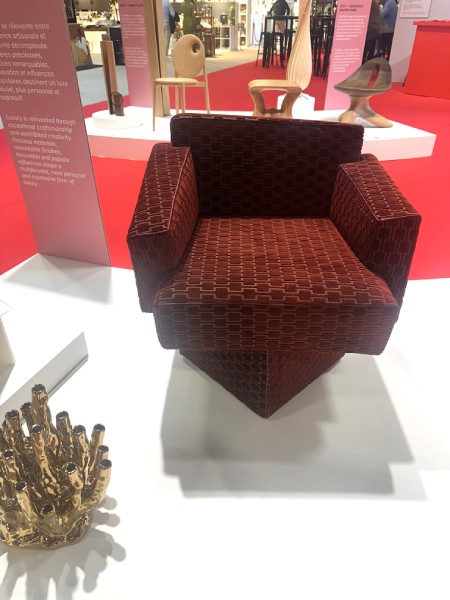
MOM, the marketplace for M & O, celebrated 10 years with a retrospective orchestrated by Macquespacio. Walking down memory lane presented different styles through the decades, including a brutalist chair upholstered in velvet for an unexpected luxurious turn.
What’s New In Retail, curated by designer Pauline Glaizal, went far afield with its Nouveau Souffle display, literally planted in a meadowy garden. Most notable: the Nomadic Workstation, a pink metal framed mobile glass set in a field of wildflowers, contrasting a natural environment with tech. It’s equipped with heavy duty caster wheels to support a movable modular design.
Finally, (Im)Pulse created a network for students and prospective entrepreneurs, kind of like Satellite does for young designers at Salone.
The synergy between M & O and Paris Design Week boost both. Paris Factory venues in the Marais underscored the importance of the global crafts movement. South Korea has beefed up its presence at design shows. At Gallery Joseph, 18 students from Kongiu National University’s Department of Furniture demonstrated innovative craft, including an intriguing steel mirror with a moving media eye to symbolize the anxiety of being watched. At the Hotel de la Marine, Hanjimania featured Hanji paper creations, crafted in a 1000-year-old tradition, by six French and 13 South Korean designers, set in luxurious 18th century state rooms.
The emphasis on craftsmanship carried over into other public exhibitions. At the Grand Palais, Julian Sebban of Uchronia designed a massive 7-meter-tall flower bouquet matching the scale and drawing from the mosaic floor and pastel palette of the Rotunda d’Antin.
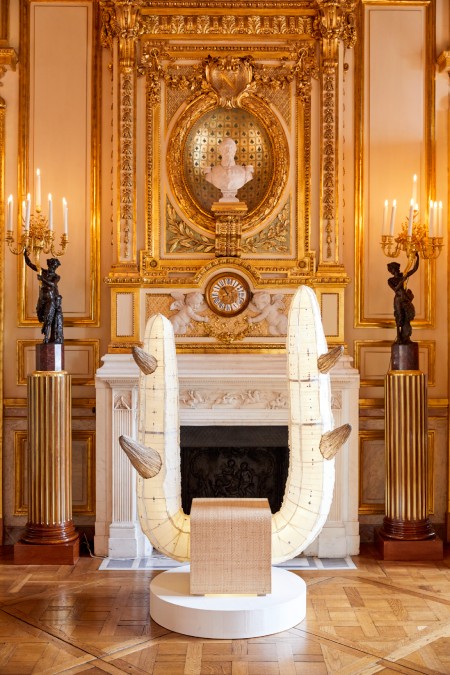
Irish designer Joseph Walsh drew visitors to the courtyard of the Hotel Sully with a graceful sculpture clad in gold leaf. Inside, a capsule collection of some of his winding organic wood furniture, still is on display through October 25.
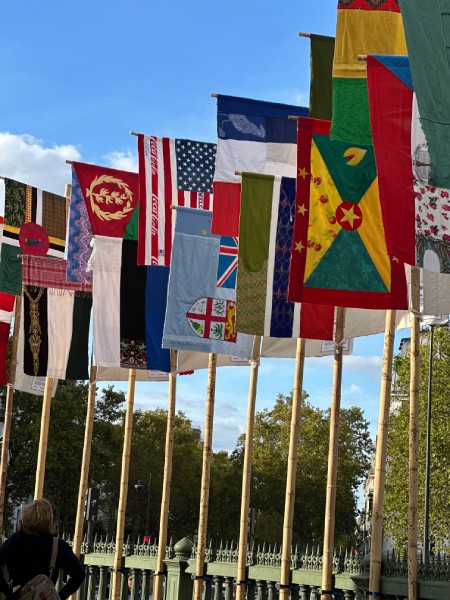
Around the Bastille, there was an impressive installation of 191 United Nations flags, all carefully crafted with recycled materials, playfully referencing cultures. For example, the Japanese flag featured a fragment of a vintage kimono. The French, a piece of Chanel and a chef’s shirt. The US, Levi’s denim, of course.
Among the outstanding visits in the city:
- Bon Marche’s Super Japan punctuated the strong influence of the country’s design and craft. As the retailer always does brilliantly, the theme was carried out throughout the building, with food sourced from the Parisian concept store iRASSHAi. In the furniture salon, Scandi fusion came to the fore with a strong Japandi presence. Bonus: a couple of new designs at Knoll, including a collection using rounded dowels and nodding to Japanese craftsmanship, by Minneapolis architect/sculptor Jonathan Muecke.
- The Boon Room has a new home, a 19th-century private mansion on five floors. Known for outstanding curated modern collectible design, the multi-level interiors gave plenty of space and a true art gallery vibe.
- The high-end fabric house Pierre Frey, which previewed its new furniture showroom in January, officially opened on Rue du Mail. It was like a chic Parisian apartment, highlighted by the new sculptural Vesta collection by Garnier & Tinker.
- Pinto continues its collab with Nobilis, this time with wallcoverings. Plus, a lighting collab with Megumi, with a suspension lamp made from hand crafted washi paper and cotton ropes dyed with red cabbage. Des Tresses is another strong collection featuring bronze roping inspired by braiding and woven textures of nomadic cultures
- Tikamoon, an eco-friendly French furniture brand known for high-quality sustainable wood furniture, celebrated its larger new location on Avenue de l’Opera with new pieces made from teak and acacia.
- One of the designs for Tai Ping’s The Fifth Wall collab with Paris designers Guillaume Garnier and Florian Tinker for it is Edward Fields brand featured a shifting New York skyline.
- A new collection at Schumacher, including a plaid indoor-outdoor group, had crossover contract appeal.
- Yves Soloman introduced its first luxury furniture collection titled Tactile Monuments. The designer is known for repurposing shearling and vintage furs.