
It’s hard to imagine a group of designers more dedicated to what they do than those who create spaces for schools and universities. Design is important in every space we inhabit, but when it comes to education, it can mean the difference between a child experiencing the joy of learning or the frustration of falling behind.
That’s one of the reasons I enjoy covering EDspaces, an annual show about all things education design that was held last week in Kansas City.
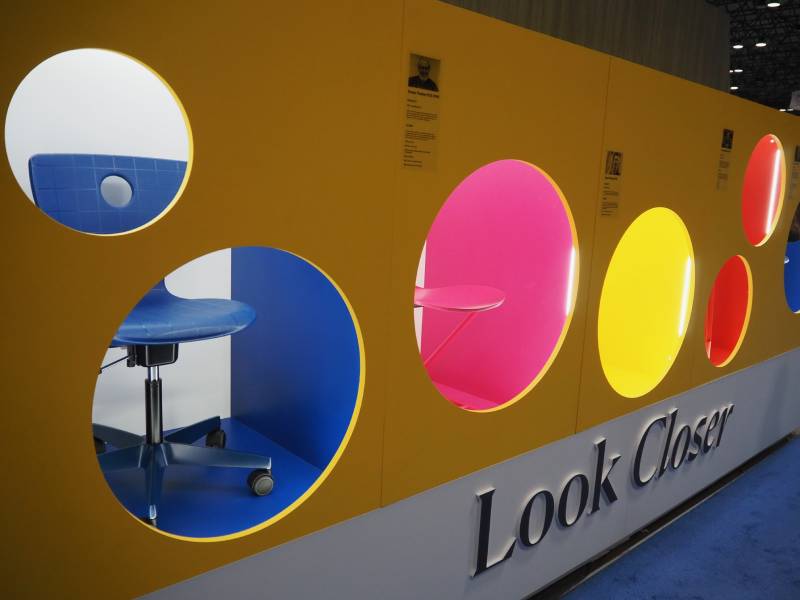
And it did not disappoint. It brought together thousands of designers, furniture and interiors companies, educators and administrators who were eager to learn about the latest trends in educational space design.
There’s something special about the annual gathering, said Joe Tucker, EDspaces show director. “You look around this room, we have school and campus leaders, architects, dealers, facility professionals, manufacturers, technology experts, construction,” he said. “It’s all the people from across the learning environments community. In our everyday work, we often approach the same challenges from very different directions. But here at EDspaces, those perspectives all come together and that’s what makes this event different. Because no single profession, product or organization can create a great learning environment on its own. It takes all of us.”
EDspaces is similar to the recently held Healthcare Design Conference + Expo in that both feature deep learning experiences and expo halls filled with products.
EDspaces kicked off with a keynote presentation by Bruce Mau and Aiyemobisi “Bisi” Williams who are creative partners, spouses and co-founders of the Massive Change Network, an integrative design and-problem-solving organization.
The pair spoke about designing the world as a “learning machine.” Their presentation argued that schools should be designed as comprehensive learning environments rather than simply buildings filled with classrooms, furniture and technology. They contend that design is about what an environment makes possible, not just how it looks. Every element — furniture, lighting, acoustics, technology, policies and curriculum — contributes to the learning experience.
“The work that you’re doing is so profoundly urgent and fundamentally important to who we are and what our culture becomes,” said Mau. “You have the power to imagine the future and to work as designers or with designers to make those futures come true. And it really becomes our shared responsibility to do the very best we can for our children and their future generations.”
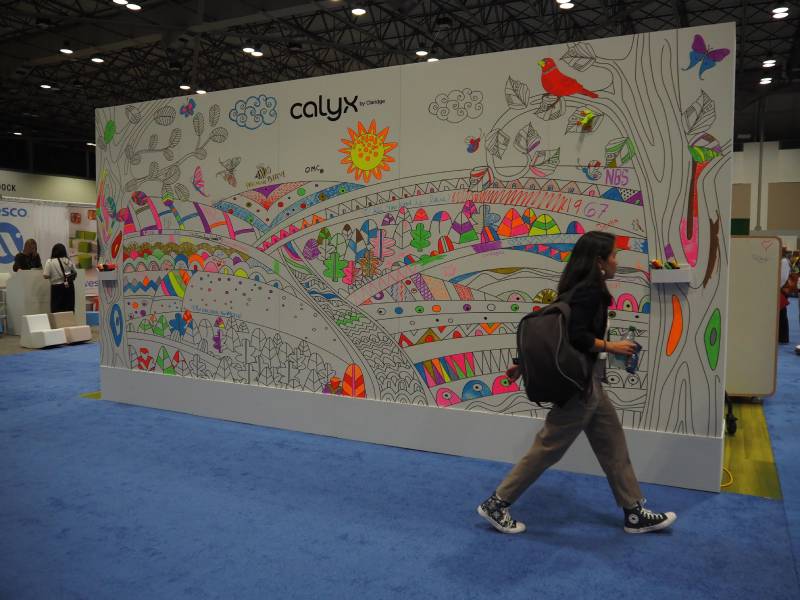
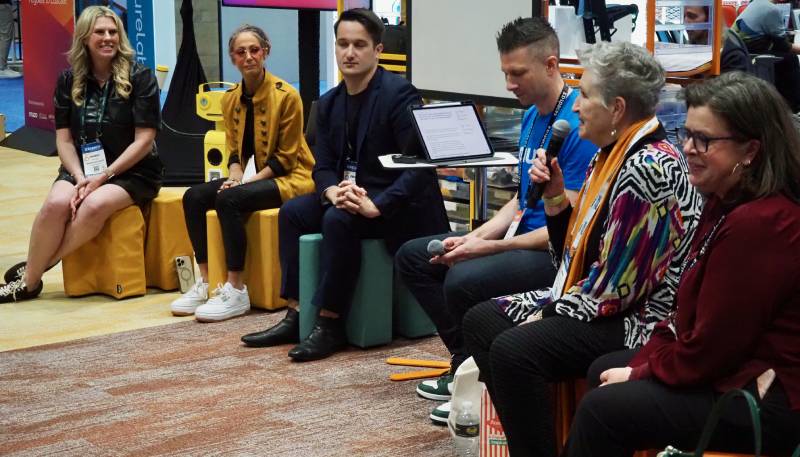
Educational sessions are an important part of EDspaces. Collectively, the education sessions looked at how can schools create environments that improve learning, support different student needs and adapt as teaching methods change. Major themes included:
Neurodiversity, regulation and inclusion. A substantial portion of the program addressed how sensory conditions, movement, play, acoustics, lighting and spatial organization affect students with different neurological and behavioral needs. Sessions such as “The Brain in the Room” and “Spaces for Every Mind” explored how design can support regulation, participation and learning rather than expecting every student to adapt to the same environment.
Student well-being and belonging. Presentations examined how school design can reduce isolation, strengthen social connection and make students feel welcome. One session drew on a national survey of more than 500 adolescents to explore the relationship between the physical school environment and students’ sense of belonging. Student voice and genuine inclusion were also recurring subjects.
Educator wellness. The program gave more attention to teachers and staff, including research on dedicated wellness spaces, psychological safety, collaboration and retention. The underlying argument was that supporting educators is part of creating successful learning environments, not an unrelated facilities issue.
Flexible learning and furniture. Sessions challenged the idea that flexible seating alone creates better learning. Presenters examined how furniture selection and classroom layouts influence engagement, collaboration, student agency and teaching practices. One year-long study looked at those relationships in two secondary classrooms.
Renovation, CTE and changing educational models. Presentations explored adaptive reuse, rethinking existing facilities, career and technical education, early childhood environments and the transformation of libraries into collaborative learning hubs. The emphasis was on aligning facilities with real-world learning and changing instructional models.
Technology and evidence-based design. AI-supported teacher preparation and technology-enabled safety appeared alongside sessions on post-occupancy evaluation. The latter focused on measuring how buildings actually perform after students and educators move in, using feedback and data to inform future projects.
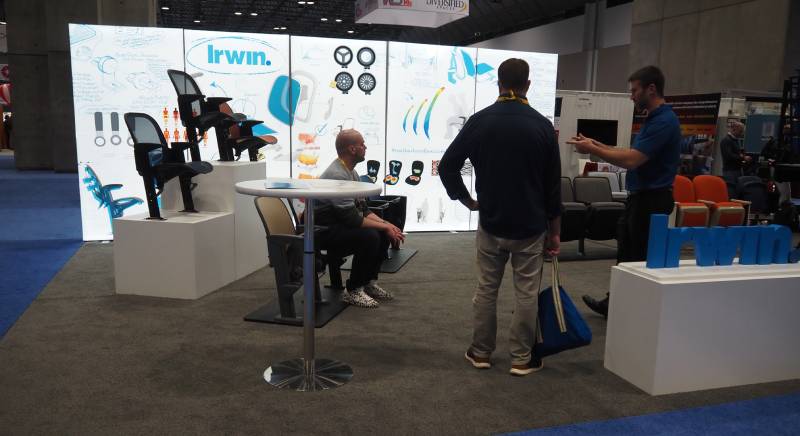
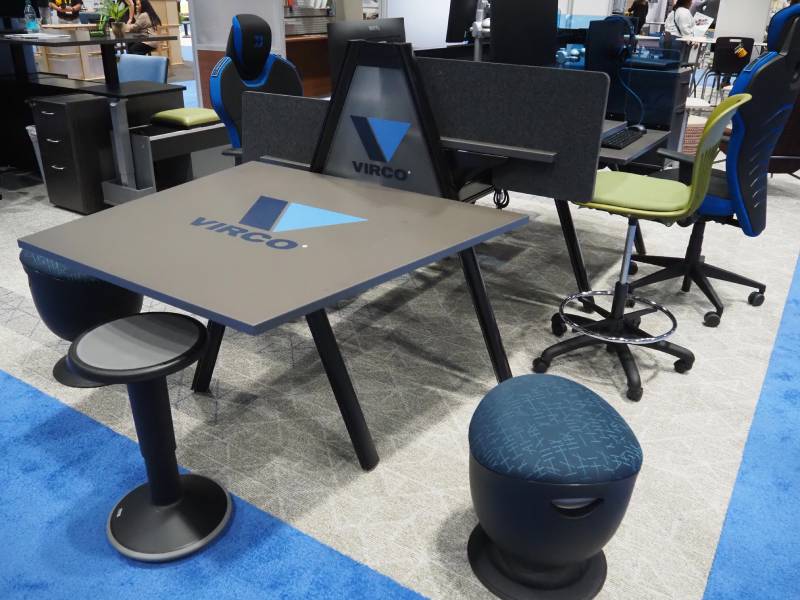
In the expo hall, designers, educators and administrators could view the latest classroom furniture and furnishings.
HON’s key education pillars are choose with confidence, move with purpose and thrive with possibility, said Alexa Wehrle, associate marketing manager. Its new Scribble chair was prominently displayed on the company’s stand and is a good example of how educational furniture is different than what the company makes for the office.
“The Scribble chair has sensory texture underneath (the chair shell), which is designed for students who naturally fidget more with their hands. It also has a flexible back for some additional movement. The back moves with you, not fights against you. We also really though about the power of choice and student choice and seating. When they feel the most comfortable, that’s when they are going to learn the best,” she said.
Technology, of course, could be found throughout the show, both embedded in the products and used to create the products themselves.
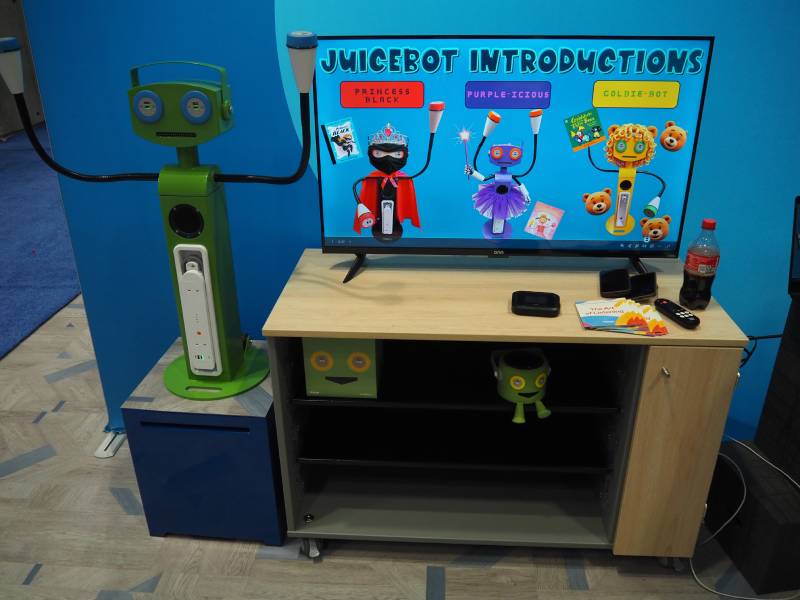
The Muzo JuiceBot is an interactive, audio-based learning tool that uses customizable sounds, music, visual cues and two-way language translation to support literacy, language development, sensory regulation and student engagement.
Erica White, a librarian with Irving Independent School District in Texas, is using the Muzo JuiceBot to make the library a more interactive, inclusive and engaging place to learn. What began as a single-unit pilot grew into a broader program after White secured grant funding by demonstrating improvements in student comprehension when audio and language were incorporated into learning activities. The JuiceBot supports a range of applications, from sound effects and music that bring storybook read-alouds to life to sensory circuits that help young students release energy, focus and calm down before moving to the next activity. White also creates customized sound packs that encourage students to predict, infer, recognize letters and sounds, and connect stories with movement and music. “Story time is now completely immersive for the students,” she said.
Language accessibility is another important use. With 76% of the district’s students identified as emergent bilingual learners, the JuiceBot provides translations and real-time two-way communication, helping students engage with stories in their own languages while exposing English-speaking students to other languages.
White has made the technology part of the school culture, giving librarians their own units and involving students in naming them. Her approach demonstrates how a relatively simple technology can support literacy, language development, sensory regulation and student participation.
Tenjam, a Minnesota-based furniture maker, began 3D printing about a year ago, initially developing its products for the swimming pool market. The company engineered the materials to withstand outdoor conditions, including water exposure, but its products have also found a place in schools. After introducing a 3D-printed chair at EDspaces, Tenjam began receiving education orders, with schools drawn to the connection between the products and STEM learning, said Mike Collins, president and owner.
The technology also gives the company flexibility to experiment with new designs quickly. Collins cited a divider panel developed just two weeks before the show as an example: “The cool thing about 3D printing is you can just kind of dream it up and let it fly.”
Education now represents about 40% of Tenjam’s business, with the balance in hospitality and residential markets. The company is working to grow that share through products that help schools activate outdoor spaces as informal learning environments, offering students alternatives to traditional desks and classrooms.
Stewart Brown of Nook said EDspaces is his favorite show of the year.
“I get to see a mix of real end users who are interested in what we’re talking about and dealers who work with us to make it all happen. It’s very hands-on, very practical and people here are genuinely interested to understand how to make their spaces better,” he said.
The distinctive house-shaped pods, are popular in education from cafeterias to corridors to classrooms to media centers to admin offices. Sensory models are available to help neurodiverse students recalibrate.