
The Healthcare Design Conference + Expo returns to New Orleans Oct. 17-20 with its largest and most expansive program yet, bringing together architects, interior designers, healthcare executives, engineers, facility managers, contractors and other professionals involved in the planning, design, construction and operation of healthcare environments.
This year’s event at the Ernest N. Morial Convention Center will be different from previous HCD conferences in one important respect: The show is co-locating with the International Federation of Healthcare Engineering’s 29th World Congress. It is the first time the two events will share a venue, creating a wider gathering that connects the people who design healthcare environments with the people who operate and engineer them.
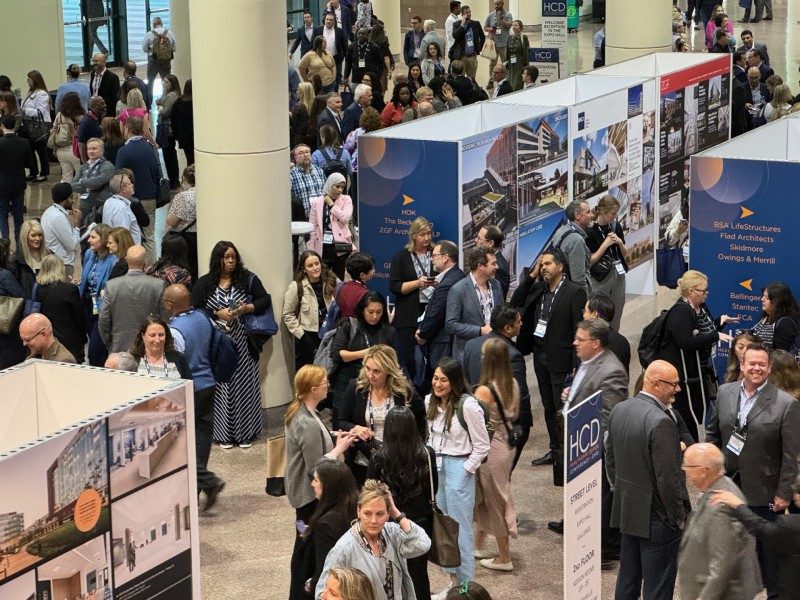
For visitors arriving in New Orleans, that means four days of education, product discovery and networking, with an international component incorporated into the traditional HCD program.
Healthcare design used to be a niche, but as massive hospital projects come online and healthcare becomes more important, HCD is becoming an important show for both manufacturers looking to expand into additional verticals and dealers who want a piece of the multi-billion dollar industry. The AIA’s July 2026 Consensus Construction Forecast calls for healthcare construction spending to increase 2.6% in 2026 and accelerate to 4.4% in 2027. AIA attributes the underlying demand largely to the aging U.S. population, which is increasing demand for healthcare buildings ranging from hospitals to outpatient clinics and nursing homes.
JSI has been building furniture in southern Indiana for 150 years, but launched JSI Health a few years ago. The company believes it can bring a fresh, human-centered perspective to the healthcare furniture market — one that combines the warmth and emotional connection people want with the performance, flexibility and durability healthcare organizations require, according to Aneetha McLellan, executive director of JSI Health + A+D.
“Our heritage in design, craftsmanship, and hospitality-inspired environments allows us to create solutions that feel less institutional while still responding to the realities of care delivery. We bring a focused portfolio that supports patients, families, caregivers, and administrators, along with a collaborative approach that helps healthcare organizations solve real challenges around experience, workflow, space utilization, and long-term adaptability,” she said. “Ultimately, we want to help elevate healthcare environments from places people simply have to be into spaces that promote comfort, dignity, connection, and confidence in care.”
As manufacturers move into healthcare, dealers are following. Henricksen has moved into the market as a “natural evolution” of the business, said Gina Parker, director of healthcare strategy. As its healthcare work grew, Henricksen attracted specialized talent and identified the areas where it could add the most value. From there, the company became more intentional, building on what was already working and making it even stronger.
Still, healthcare is a different market, she said. “I began my career as a dealer designer focused on office projects, so I have experienced both project types firsthand. The key distinction in healthcare is the number of interconnected considerations that must be addressed simultaneously,” said Parker. “Cleaning protocols, infection prevention, material performance, aesthetics and budget all influence the furniture solution. Healthcare environments also offer fewer repeatable typicals and require clinical knowledge to support specialized spaces such as laboratories and pharmacies. The recliner that works in infusion may not work in mother-baby or a general inpatient room. Successful planning starts with asking thoughtful questions to uncover each department’s patient needs, clinical workflows” and operational requirements, then coordinating the furniture solution with plumbing, medical gases, emergency power, electrical systems and data infrastructure from the outset.”
Gaining that kind of knowledge means showing up at events like HCD. Parker will be at the show for Henricksen, along with representatives from each of its markets. They will have a lot to take in.
HCD is offering more than 110 educational sessions covering subjects ranging from behavioral and mental health in sustainability, technology, outpatient care, research and project delivery. The program is organized around 13 tracks, including three new for 2026: Technology & Innovation, Design Forward and an IFHE track.
The Technology & Innovation track reflects how quickly digital tools are entering healthcare design. One session, for example, will look at AI as a collaborator in healthcare design, including how AI-supported workflow analysis and predictive modeling might help teams identify operational risks and flaws before they become embedded in a project.
Other tracks address the more common concerns of healthcare design. The Mental & Behavioral Health program examines environments that support effective care delivery, while the Research, Outcomes & Lessons Learned track focuses on research studies and post-occupancy evaluations. The Resiliency & High-Performance Design program explores sustainability, building systems and operational approaches.
The conference also will continue its attention to clinical and operational perspectives, including sessions for owners and providers, project planning and delivery, specialty populations and care environments.
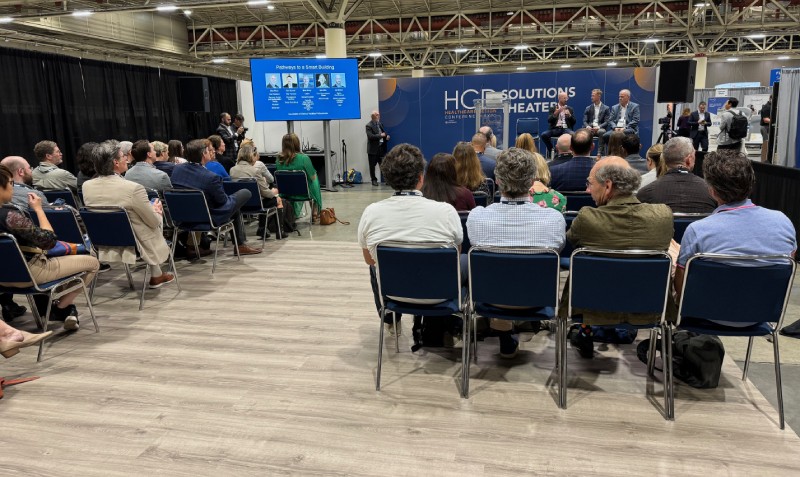
Four plenary sessions will provide larger-stage programming. Richard Heinzl, founder of the Canadian chapter of Doctors Without Borders and CEO of My Next Health, opens the conference Sunday morning with a look at AI, robotics, nanotechnology and genomics and their implications on healthcare delivery. Other keynote programming includes the Healthcare Design Magazine Awards Luncheon, an industry panel and the finale of Healthcare Design’s Breaking Through conceptual design competition. Four finalist teams will present their ideas live, with the audience selecting the winner of a $10,000 prize.
One of HCD’s strengths is its facility-tour program, and this year’s tours give attendees a chance to see healthcare design in operation rather than only in photographs and presentations. Saturday’s tours include the new Robert J. and Debra H. Patrick Neuroscience Center at Ochsner Medical Center, which brings together neurologic and mental health specialties, rehabilitation and behavioral health in a five-story facility. Attendees also can tour East Jefferson General Hospital and learn about its transformation as Tulane Medical Center’s academic teaching functions are integrated into the campus.
Two preconference workshops will address hospital outpatient department designation and the future of medical care project delivery. Both the workshops and facility tours require advance registration.
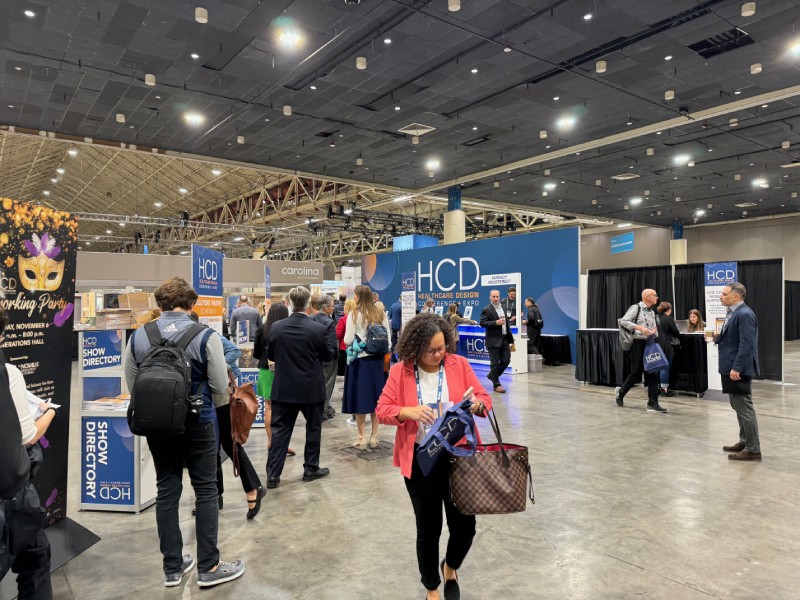
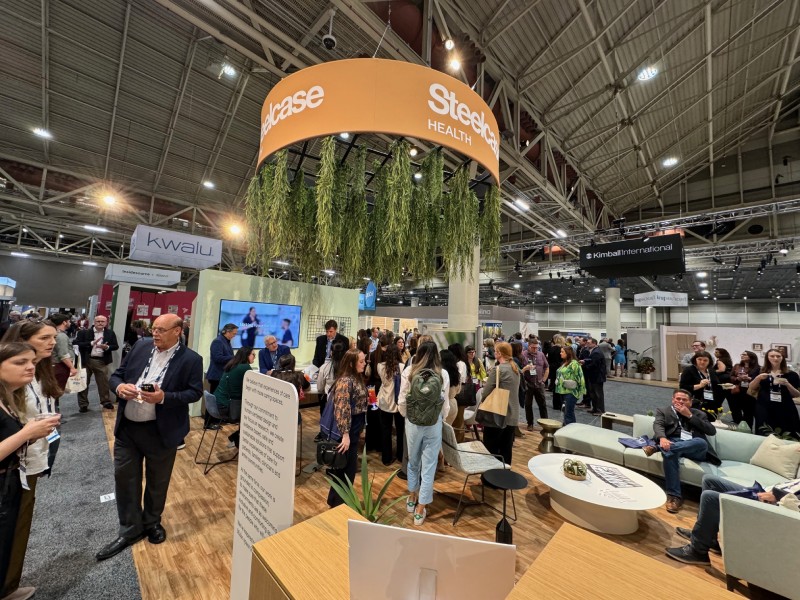
The expo floor also is expanding. HCD says more than 400 vendors will exhibit, showcasing products and services for hospital and clinic environments. The floor will include the Solutions Theater, where exhibitors and industry partners will present short sessions focused on emerging tools, products and approaches to healthcare challenges.
The co-location with IFHE adds another dimension to the event. The shared exhibit hall will include an IFHE Pavilion focused on healthcare engineering and facility management, bringing products and solutions relevant to the operational side of healthcare facilities into the same environment as the design-focused HCD exhibits. IFHE also brings 30 sessions addressing engineering strategy, operational fitness, facility planning and global healthcare perspectives.
The expo schedule begins Sunday with a welcome reception from 4:30 to 7 p.m. Monday and Tuesday offer dedicated exhibit hours, lunches on the show floor and additional networking opportunities.
For attendees, the conference will also be easy to navigate once they arrive. The convention center is accessible by rideshare, public transportation and on foot from many downtown hotels. The French Quarter, Warehouse District and convention center areas are walkable, with streetcars and buses providing additional transportation options.

There is also plenty of opportunity to get out of the convention center. The HCD schedule includes an annual networking party Monday evening, while the first-timer program spotlights the opening reception, informal peer exchanges, meals and conversations on the expo floor as important parts of the experience.
The result is a Healthcare Design Conference that is broader than a typical conference and trade show. In New Orleans, designers will be sharing space with engineers, facility managers and operators; and manufacturers will be demonstrating products alongside discussions about research and clinical outcomes.
For anyone working at the intersection of healthcare, architecture, interiors, construction and operations, that convergence may be the most important thing to expect when HCD opens in New Orleans on Oct. 17.