
Historically, interior design has focused on the indoor aesthetic of a space — spatial, acoustical and experiential needs — where, at best, indoor health was considered. While more emphasis has been placed on material selection and certification specifications within the confines of the designed space, awareness is growing of the upstream and downstream impact our choices have.
Consider that while reducing a building’s operational carbon emissions is improving, embodied emissions from design, production and deployment of materials have lagged, according to the UN Environment Program report “Building Materials And The Climate: Constructing A New Future.” It notes that the buildings and construction sector is by far the largest emitter of greenhouse gases at 37% of global emissions.
“We often think about our impacts only in the footprint of the spaces that we’re designing,” said Laurel Chądzyński, the mindful MATERIALS Forum Facilitator. “More recently, we’ve started to recognize that the resources that we use to make materials are finite. What we put into the atmosphere and we put out to the Earth stays in our bodies or in our communities.”
What Chądzyński called the use of “mindless materials” in the built environment can leave an impact on our climate, ecosystems and sometimes even the most vulnerable populations that, as designers, you may be trying to protect.
Designers are being asked to consider aesthetics alongside understanding the full lifecycle of material selection and all sorts of impacts it places on humans. Alongside a variety of certifications and project limitations, it can quickly bog down a team and the project as a whole.
Looking to provide support for an often fragmented system, mindful MATERIALS developed the Common Materials Framework. This guide provides design professionals and manufacturers a common language to align on sustainability information.
Chądzyński noted that more than 600 green product certifications, disclosures or eco-labels exist today within the material and building space. Without an in-house material expert, firms can become bogged down in what she calls a “material tax,” spending a large portion of billable time collecting, exchanging and updating data related to these certifications.
Even before that, should project participants come with different definitions or expectations of what acceptable looks like, this can slow down conversations and data collection, resulting in misaligned project results.
“If we have more action without alignment, it leads to more confusion in the market,” she said. “For designers, specifiers and purchasers of materials who seek to be more intentional about limiting or reducing impacts, it is helpful to get clear on what types of disclosures are simply transparency documentation.”
Seeing a need for a structure to organize and interpret sustainability data across the built environment, building on the AIA Materials Pledge signed by over 300 firms, mindful MATERIALS wanted a way to simplify what it means to take action. Through cross-industry collaboration with architects, owners, manufacturers and eco-lables, the Common Materials Framework can filter criteria from more than 100 certifications in the built environment. It isn’t something that mindful MATERIALS developed in a room by itself, Chądzyński said.
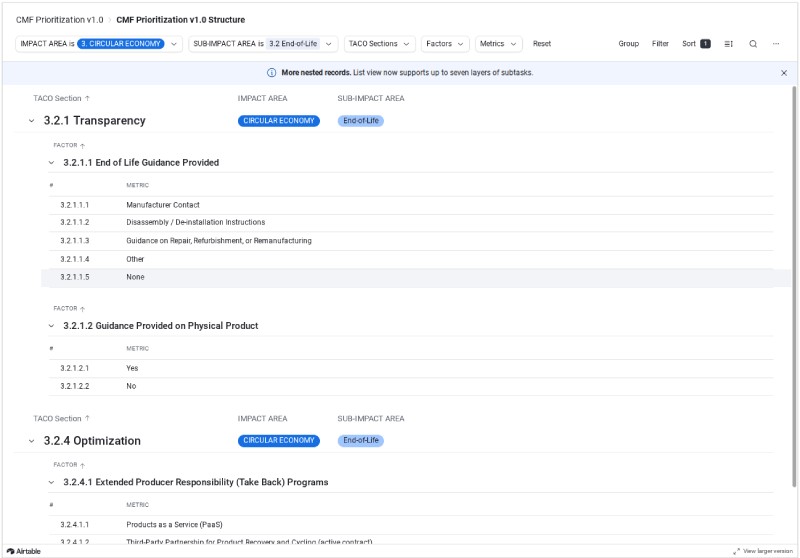
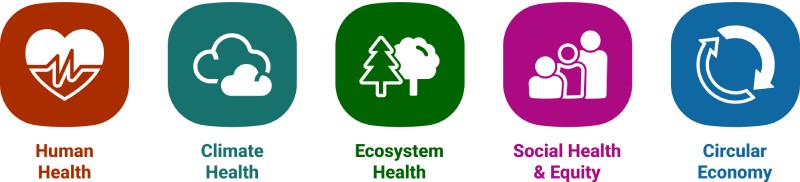
Rolled out as the CMF Prioritization v1.0, it is broken into 5 broad categories (Impact Level), each with their own subcategories (Sub-Impact Level) around sustainability in the built environment. These are each then rated on a spectrum (transparency, assessment, commitment, optimization) by data (Factor/Metric), offering role-based guidance.
What started as a digitized database within the mindful MATERIALS Product Portal, the Framework is now embedded into the tools and workflows that designers use – think: Material Bank, Acelab, BuildingEase, and similar sites. Additionally, designers can discuss if or how materials fall within the framework with vendor showroom employees or representatives, Chądzyński said.
“Just setting the level with your client and your project team about what goals or values you want this project to embody can help you hone in on the types of impacts you want to either better understand through transparency documentation, or reduce by prioritizing products and materials that have demonstrated optimization in that given area,” she said.
For designers wanting to dip into the framework, she advises:
- Starting with a pilot project, or even a portion of a project
- Before beginning, set an attainable goal (for example, “I’ll ask every manufacturer if they have an Environmental Product Declaration).
- Have conversations with vendors and manufacturers about their practices and material transparency, using unified CMF language
The topic of material health and materials impacts can be very complex, Chądzyński said, but it’s important to be aware of for the health of ourselves and our environment.
“As designers, we have a huge impact through our material selections, and with that comes a huge responsibility to be mindful of those impacts and intentional about them to the best of our ability,” she said. “For designers, the CMF allows us to parse out granular data without needing a materials PhD on staff.”