
Editor’s Note: What happens when two generations of Kuchar designers imagine the future of work? Principal Sarah Kuchar-Parkinson sits down with Rachel Benitez and Makayla McGee to find out. Benitez is a 42-year-old millennial and McGee is a 25-year-old Gen Zer.
Let’s start with the obvious: What excites you most about designing workplaces right now?
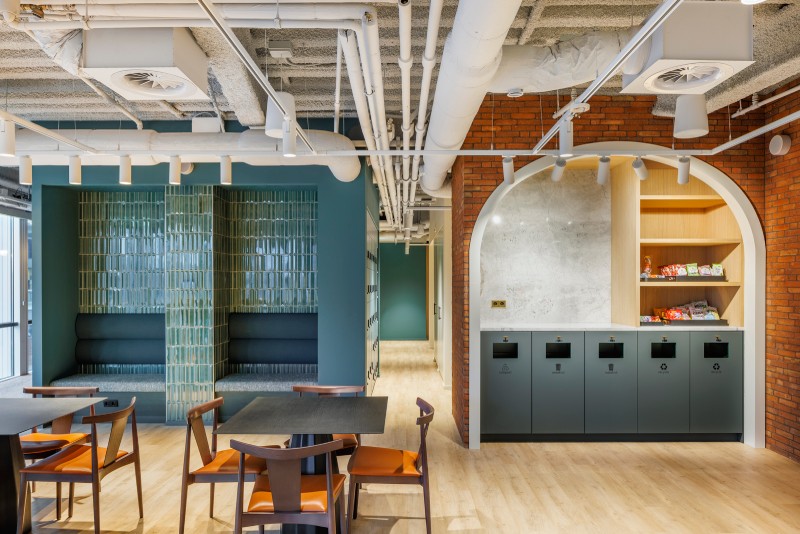
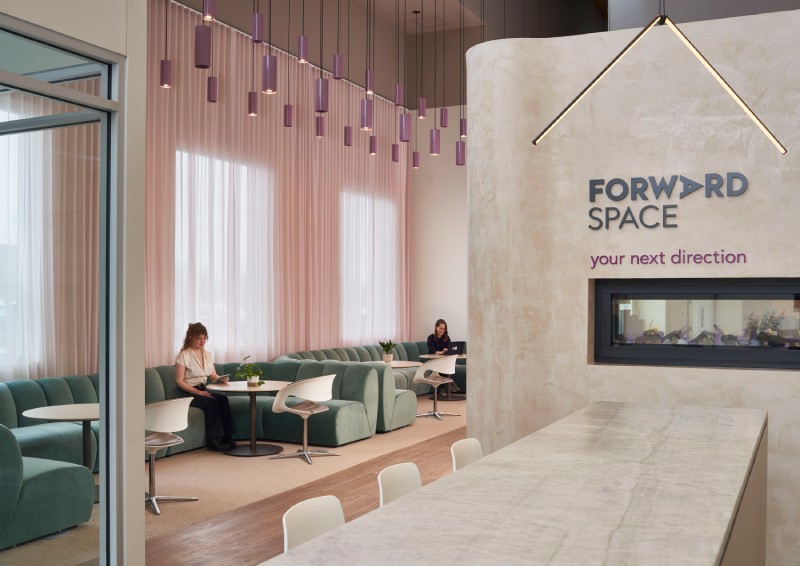
McGee: I think it’s how much workplace design is borrowing from hospitality. We’re working on a café space within an office right now, with banquettes, layered lighting and a much warmer, more inviting feeling. It feels more like a restaurant or hotel than a traditional office—and I love that shift.
Benitez: I completely agree. It’s a fun way to combine what we do best as a multidisciplinary firm. We’re also seeing clients become much more willing to experiment with color and make more adventurous decisions. There’s a real desire to create workplaces that people actually want to come back to.
Do you think your generations have different ideas about what an office is supposed to be? What do you think people expect from the environments where they work?
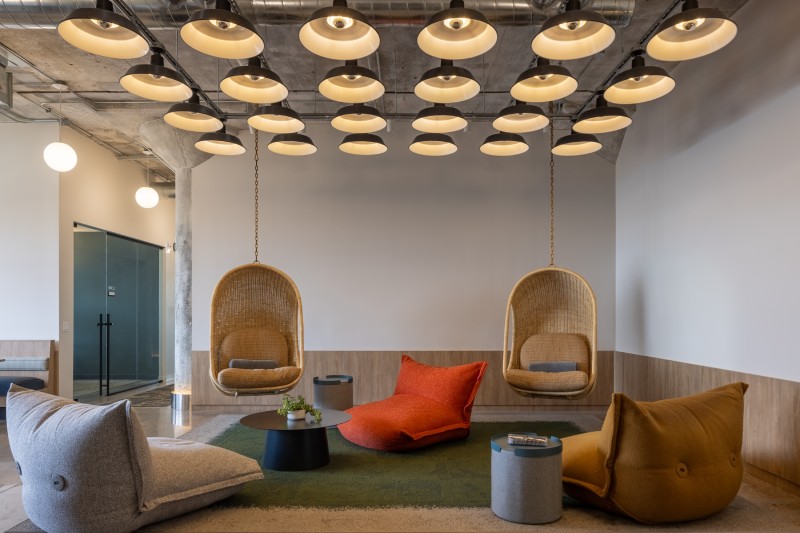
McGee: I don’t think my generation automatically associates work with one specific place or posture. You might spend part of the day at a desk, move into a collaborative area, have an informal conversation in a lounge and then work somewhere else entirely. There’s an expectation of choice based on how you work best.
Benitez: My generation came from a world where there really wasn’t a hybrid model. You had your desk and a conference room. I’m living in a moment now where I’m so happy to have these choices. We were starved of something we didn’t know we needed, and now it’s wonderful to have options for posture, privacy and how we work.
And personal spaces—what was that 15 years ago? It’s nice to see organizations thinking about those needs now.
There’s been so much conversation about getting people back into the office. But is the real question where people work—or why they would want to be there? What makes an office worth showing up for?
Benitez: I think it’s different for every individual. I love going into the office because I love tapping into the resources that are my colleagues. We set our own schedules, so I can come in and work with the team when I want that collaboration, but I can also step away as a trusted employee. It creates the work-life balance I need. I also have two small children, so having the flexibility to pop out and drop off the lunch that was forgotten—that’s something I craved. Now that I have it, it’s great. There isn’t enough time to balance everything anymore: taking care of kids, going to the gym, drinking the correct amount of water. [Laughs.] Flexibility matters. And does it help that we have a thoughtfully designed, creative and colorful office at Kuchar? Absolutely.
When you walk into a great office, what’s the first thing you notice?
McGee: For me, it’s where people are gathering. I’m a collaborative worker, so I’m naturally drawn to lounges and café areas. Those spaces tell you a lot about workplace culture. Do the people who work here feel comfortable? Do they want to stay and work? You can learn a lot about an organization just by seeing where people naturally gravitate.
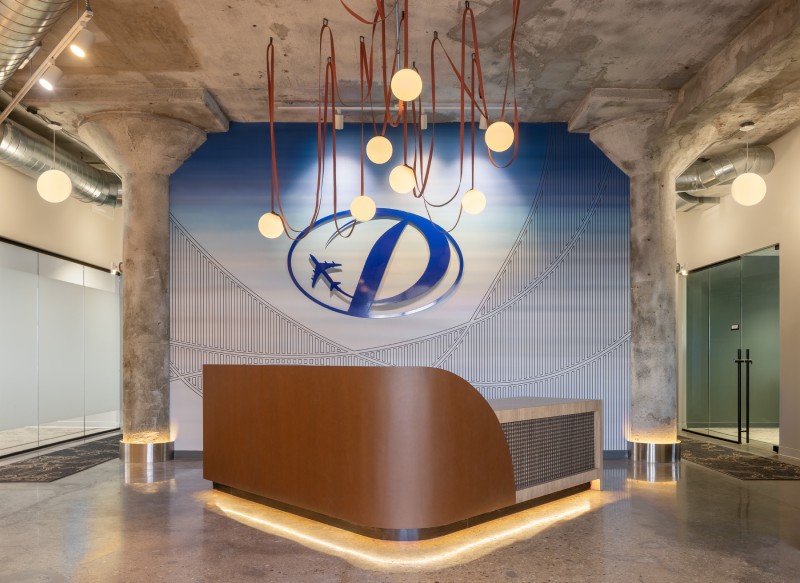
Benitez: I agree. I also think the entry is a big indicator. How are people received? If thought has been put into the first impression space, I can immediately gauge whether I feel relaxed or uptight—especially if I’m there for an interview. What does this company want people to feel? At home and welcome? Or is it more of a “get in and get out” environment?
Are there any materials or design details you’re especially interested in right now?
McGee: For workplace design, I’m really into layering materials and creating spaces that feel tactile and comfortable. Upholstered banquettes, sconces and residential and hospitality details can really soften a commercial environment. I love that balance of hard and soft. It keeps a workplace from feeling sterile.
Benitez: First and foremost, mine is lighting. We don’t have to maintain that cool-temperature, bright working environment that has been so typical of offices. Lighting can be warmer and more decorative, and it can instantly evoke a sense of welcome or comfort. I’m also interested in getting creative with expected materials. For example, we’ll most likely need acoustic materials in every workplace we design, and it’s cool to see how far manufacturers have come in terms of style, color and form for something that was once thought of as purely functional. As designers, we need to keep asking ourselves how we can use these expected materials and products in more creative ways—and take the category a step further.
You’re exposed to a wide range of commercial environments. What have you learned from working on workplace projects that has changed the way you think about design?
McGee: I came straight to Kuchar from school, and I quickly learned that flexibility has to be intentional—and that flexibility means something different for every client. For one, it might mean reconfigurable furniture that can be moved around; for another, it might mean creating a mix of workspaces and environments. It’s important to understand how a client actually works before deciding what flexibility means for them.
Benitez: I’ve learned just how much our residential work can elevate our workplace design. With residential, the design is incredibly personal. You’re working directly with the end user and learning what makes that person tick. So how can we bring that same level of individualization into the workplace?
We spend a lot of time upfront asking questions and getting to know our clients so we can develop a concept that digs a little deeper.
Is there a Kuchar workplace project that you think particularly represents where office design is headed?
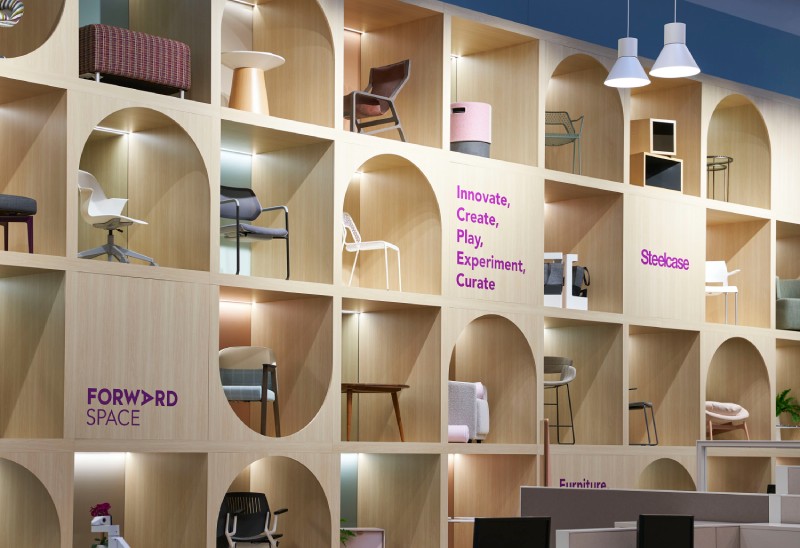
Benitez: The new Chicago Experience Center we designed for Allsteel is a great example. It’s a showroom and workplace blended together—a working showroom where the people who work there and the specifiers visiting the space share the same environment. We were tasked with creating myriad vignettes that not only showcase the products, but also demonstrate how they can make daily work more efficient, inspiring and uplifting. Rather than simply displaying products, the space invites people to experience them through interactive design areas and an immersive learning environment, with hospitality-driven spaces woven throughout. It’s a great example of how workplace design can educate, inspire and bring people together—all within a single environment.
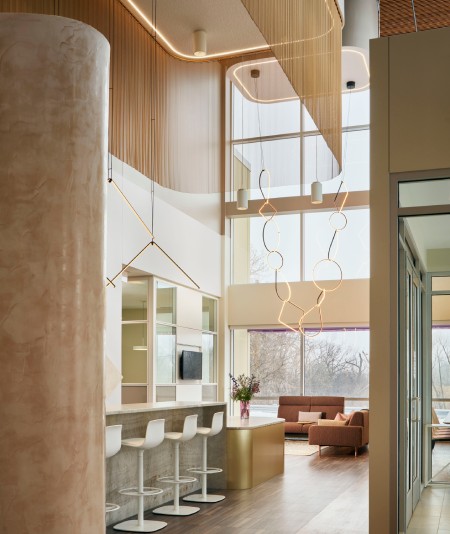
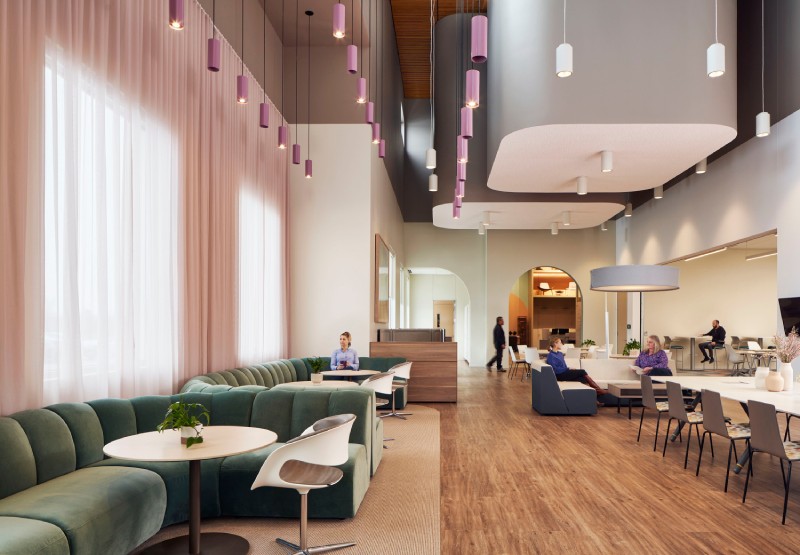
McGee: I’d say one of our financial projects—the firm we redesigned in Amsterdam with a cool café space, or the Chicago firm where we incorporated a luxe wellness spa into the offices. Both gave us an opportunity to really lean into designing for comfort and the day-to-day experience. The hours and routines can vary depending on the work people are doing, so spaces need to support that range. The café, for example, feels more like a restaurant in a hotel than a traditional break room.
I think that’s where workplace design is headed: comfort, experience and personalization.
One of our current office projects takes that idea even further, with a luxury shower and bathroom suite at the center of the expansion. Why does something that feels residential—or even hospitality-driven—make sense in an office today?
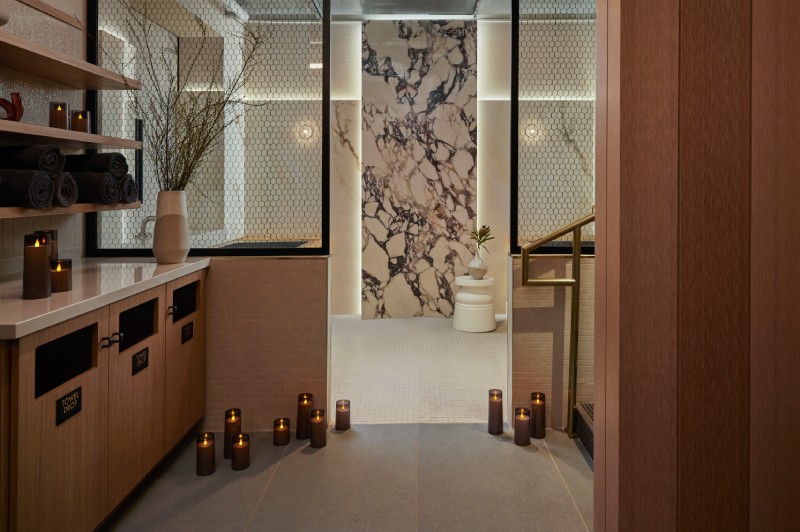
Benitez: It speaks directly to the way our residential work is influencing workplace design. We’re bringing in things like saunas, red-light therapy and other wellness-focused details. We’re also leaning into the level of detail you’d expect in a residence. Does the sconce work with the tile layout? Does that play well with the paint transitions? How can all of these elements work together to make the space feel more bespoke?
McGee: I agree. It’s about designing for the person, not just the employee. People have lives before and after work. If someone works out during the day, why shouldn’t the workplace support that? It gives people another incentive to be there because the space recognizes and supports their individual lifestyle.
As technology becomes more embedded in the workplace, where can design create moments of warmth, connection or even delight?
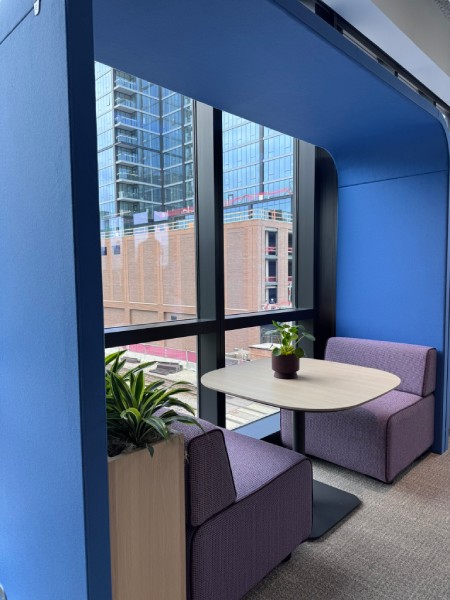
Benitez: I think a lot of it comes down to what we’re calling “the space in between.” We’re working on a showroom and an office project right now, and in both cases, we’re thinking about where people actually work between the big meetings. Maybe it’s a partially enclosed pavilion where you can step away from a meeting, talk through action items and have a quick conversation without being tethered to your desk. Those in-between spaces are becoming really important. They’re where some of the most human moments at work happen.
And how important is personality in the workplace today? Should an office primarily reflect a company’s brand, or tell a bigger story about its people, culture and history?
McGee: Very important. We’re moving beyond just putting a logo on a wall or using the brand colors. The brand should be one layer of a much bigger story. What’s the history of the business? What’s its culture? We spend a lot of time upfront getting to know our clients so we can create something that literally couldn’t belong to another company if you swapped out the logo.
Benitez: I think that more nuanced story is where I see things going. It creates a sense of pride in the workplace. The goal is for employees to feel, “I’m not a number. This space was designed for me, and I’m proud of it.”
There’s also a growing desire for workplaces to feel connected to a sense of place. What does that mean to you as designers?
Benitez: We have a project in Amsterdam where that idea has been really important. It’s about understanding how the people who live and work there actually experience the city—how they get to work, what they see, what they interact with. It’s not about creating a design that simply looks like it belongs in Amsterdam. It’s about actually researching the place and putting thought into the details. We’ve looked at local art, architecture and other references to build those layers into the project.
What are clients asking for today that would have seemed unusual five or 10 years ago?
McGee: Wellness suites, Zoom rooms, private pods, showers and spa-like amenities. Five or 10 years ago, for example, it wasn’t commonplace for workplaces to have a place for people who biked to work to clean up. Now, it’s becoming much more common. And we’re seeing more interest in making these spaces feel genuinely designed, rather than simply functional. A wellness suite shouldn’t feel like an afterthought, and a private pod shouldn’t look like a box dropped into a floor plan. Clients are thinking about the materials, lighting, acoustics, furnishings and details that make these spaces feel intentional—and even a little luxurious.
What’s one thing you wish more clients understood about designing for the future of work?
Benitez: That it’s evolving and changing, and they have to keep up in some regard. Sometimes that means updating technology or furniture. Sometimes it means rethinking walls and meeting spaces.
We’re working with a Chicago business that hasn’t redesigned its workplace in 25 years. Think about how many times the way we work has evolved since that office was originally designed. That’s the reality: things are constantly changing. Our role is to help clients plan for that change—to create spaces with the flexibility to evolve alongside the people and work they support. When you keep pace with those changes and give employees an environment that supports different ways of thinking, neurodiversity and individual lifestyles—one that delights, energizes and sparks creativity—everybody wins.
Finally, you’ve both recently been recognized as emerging voices in the design industry. As you think about your own careers, what kind of designers do you want to become?
McGee: I want to be a designer who leads with attention and curiosity. Someone who understands that nothing has to be designed a certain way just because it was designed that way before. I want to stay curious about materials and technology and keep questioning what’s possible. I think most young designers like myself are looking to established leaders to create space for us to step up, contribute our perspectives and help shape what comes next. I think the future is about bringing those voices forward while designing for greater human flexibility and individualization.
Benitez: I want to become more of a trustworthy mentor to my peers. I want the next generation to feel like they can bring a wild idea to the table without getting a handslap for it. Because every idea is a good idea until it’s not. [Laughs.] But seriously, I want the people I work with to feel comfortable sharing their ideas, challenging the status quo and knowing their voices are valued.