
Corgan’s latest workplace research takes a familiar office-design question, “How do you create environments that support focus?” and examines it through a more specific lens. What can the experiences of people with inattentive-type ADHD teach designers about creating better workplaces for everyone?
The global architecture and design firm, working with the University of Arkansas, studied how environmental conditions including light, sound, movement and visual distraction affect attention. The research was led by Corgan—Hugo, the firm’s research and innovation group, and funded through the AIA Upjohn Research Initiative.
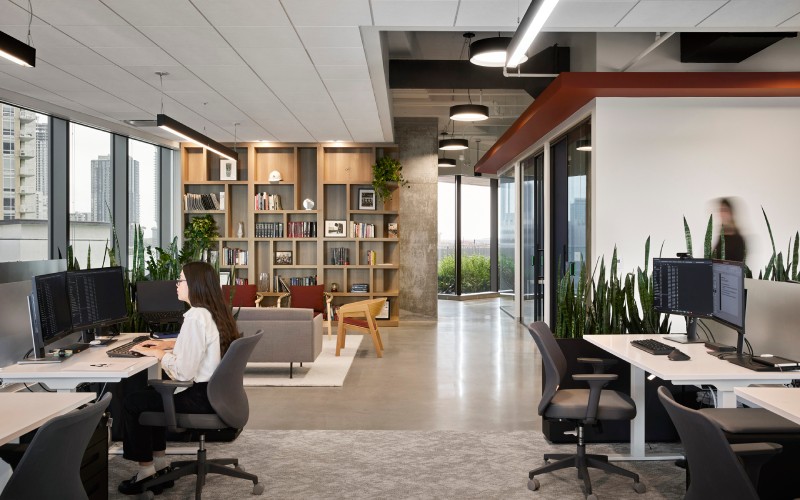
The study, detailed in the report “Focus by Design: What the ADHD Brain Teaches Us About Better Workspaces for All,” recently received a Certificate of Research Excellence from the Environmental Design Research Association.
For workplace designers, the research is notable because it moves neuroinclusion beyond a conversation about accommodating a particular group of employees. Instead, it suggests that the workplace itself can either increase or reduce the cognitive effort required to focus. That has direct implications for how offices are planned, furnished and operated.
“Modern workplaces ask us to constantly process light, sound, movement, and visual activity — and while many people learn to adapt, individuals with inattentive-type ADHD often experience the effects of those environments sooner and more intensely,” said Melissa Hoelting, assistant director of Corgan—Hugo. “Their experiences provide an early lens into how workplace design influences attention, revealing opportunities to reduce unnecessary cognitive load before those challenges have more profound impacts.”
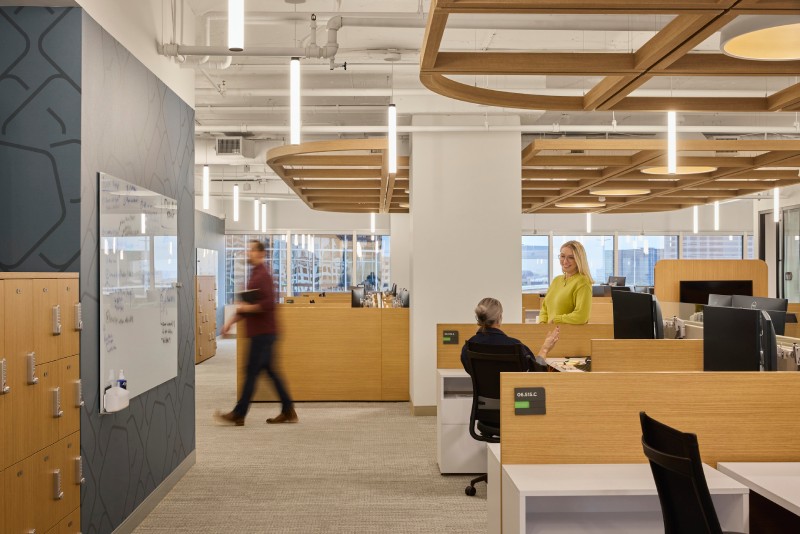
That idea is important because the modern workplace is often designed around activity. Open offices, collaboration zones, technology-rich meeting spaces and informal gathering areas are intended to create choice and encourage interaction. But choice can also introduce sensory and visual complexity.
The Corgan research suggests that it is not simply whether an office provides spaces for focus. It is whether those spaces give people the environmental conditions workers need to maintain attention.
The researchers studied people with inattentive-type ADHD and examined how they responded to different workplace conditions. Brain activity was measured using electroencephalogram, or EEG, technology before, during and after environmental interventions in both open workstations and private offices. Researchers also collected observations and participants’self-reported experiences. The results reinforce the idea that attention is not a fixed characteristic. It responds to environmental cues.
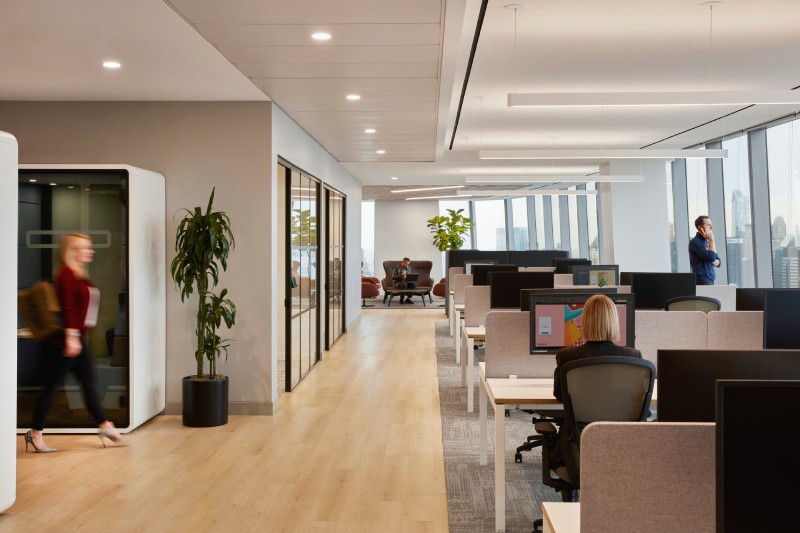
Lighting was one of the clearest examples. Participants reported feeling calmer, less stressed and more focused under dimmer, indirect lighting. Bright, direct lighting increased distraction and eye strain. EEG data supported those perceptions, showing higher sustained attention under diffused lighting conditions.
That finding adds another dimension to workplace lighting. Lighting can influence how people experience a task and how effectively they sustain attention. For designers, that could mean giving employees more control over lighting conditions rather than treating illumination as a uniform requirement throughout an entire workplace.
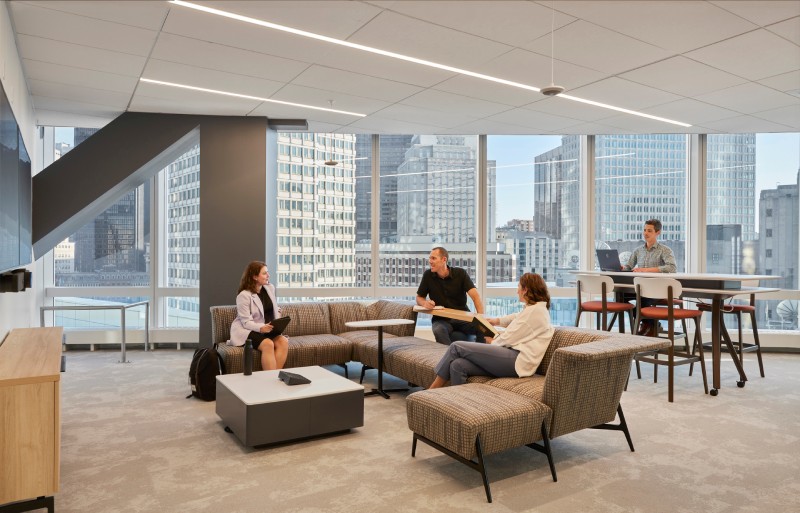
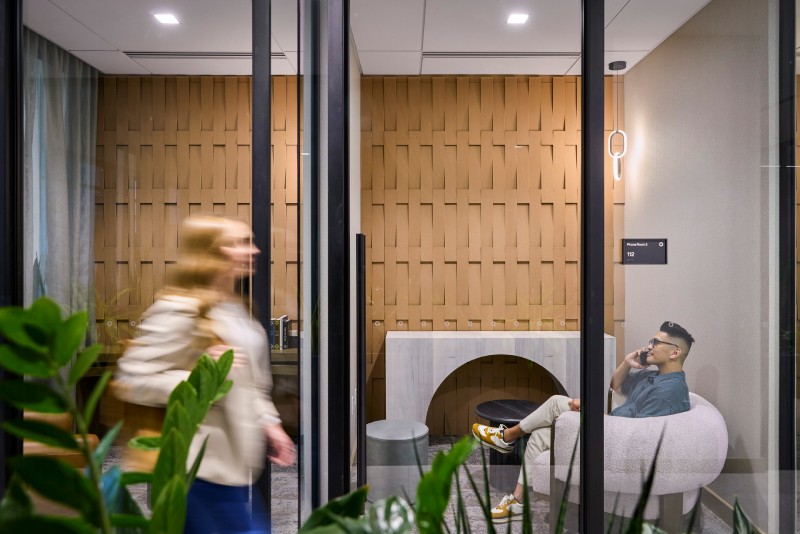
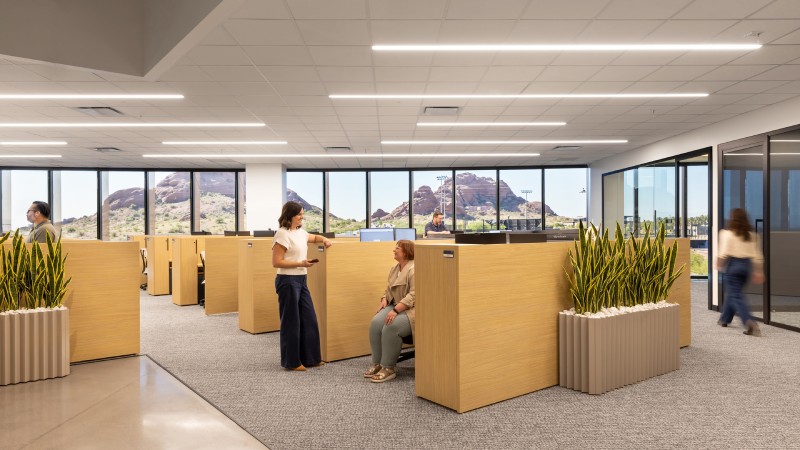
The research also explored a fundamental tension in workplace design: visibility versus enclosure. Participants whose backs faced activity reported 67% greater feelings of insecurity, even though they also reported higher concentration. At the other end of the spectrum, complete isolation was not necessarily the answer. Instead, open-office configurations that provided visual boundaries without complete enclosure produced the lowest measured cognitive load.
Research showed that creating visual control might be more important than choosing between an open office and a private office.
That is consistent with other research and thinking in workplace design. Employees increasingly need places where they can choose how much stimulation they receive. A space can remain visually connected to its surroundings while providing enough separation to reduce distractions.
For furniture manufacturers and dealers, that has obvious implications. Screens, acoustic elements, workstation configurations, privacy panels and enclosed workspaces can all become tools for managing attention rather than products specified to divide space.
The research also looked at movement. Participants tested sit-stand desks, footrests and yoga-ball seating. Brief posture changes supported comfort and attention, while continuous or exaggerated movement reduced both comfort and perceived focus.
Researchers also observed participants naturally changing posture and fidgeting as a way of regulating attention. The research does not suggest that more movement is inherently better. Instead, it points toward subtle, self-directed movement as another mechanism people can use to manage attention.
That could support the continued development of workplaces that provide multiple ways to work rather than prescribing a single posture or workstation configuration. A person might sit for part of a task, stand for another portion, move briefly and then return to focused work. Furniture becomes part of that process, giving people the ability to make small adjustments without disrupting their work.
The study also looked at the workplace as a multisensory environment. Lighting, acoustic hoods and scent were among the interventions tested, and the findings suggest that attention is influenced by the combined sensory experience rather than by any single environmental factor.
That is an important point for designers because workplace problems are rarely isolated. An employee may be distracted by a combination of overhead lighting, conversations nearby, people moving through a field of vision and the general activity of an open office. Addressing just one element may not be enough.
The larger lesson is balance. The researchers found that attention is best supported through balanced, adaptable settings that allow people to regulate stimulation, effort and recovery across different tasks and times.
That concept also changes how neuroinclusive design can be discussed with clients. Rather than creating a special “ADHD space,” designers can create a workplace with a range of environmental conditions that allow different people to regulate their own experience. Some employees may need more enclosure. Others may benefit from visual connection. Some may need quiet. Others may work better with a modest amount of background activity.
The goal is not to design one perfect environment. It is to provide enough choice and control that people can find the conditions that work for them.
Although the research focused specifically on individuals with inattentive-type ADHD, Corgan said the findings offer broader lessons for workplace design. That is where the research becomes particularly relevant to the larger conversation about employee well-being and performance.
“Attention is a valuable commodity in today’s workplace,” said Emily Strain, Corgan’s Workplace Interiors Sector leader. “Focus drives performance, and design plays a measurable role in shaping environments that support it.”
Strain said the findings are strengthening how Corgan advises clients, helping translate research into workplace strategies focused on focus, well-being and performance.
The timing is significant. Offices are being asked to support more competing demands than ever. Employees need spaces for concentration, collaboration, learning, social interaction and recovery. At the same time, technology and AI are increasing the amount of information people process and the speed at which they are expected to respond.
The result is a workplace where attention has become a serious design consideration. People differ in how they respond to sensory stimulation, visual activity, noise, movement and enclosure. A successful workplace therefore needs to accommodate those differences.
That means neuroinclusive design is less about designing for a diagnosis and more about designing for human variability. And like all good design, that helps everyone, not just the neurodiverse.
Corgan’s research offers evidence that those conditions matter and that relatively straightforward changes in lighting, visibility, movement and sensory balance can influence how people experience and sustain attention.