The best workplace projects usually start with a simple question: Why should people want to be here?
That question has become more important, not less, as work has become more flexible. The office no longer earns its role by default. It has to offer something specific: connection, clarity, energy, learning, culture, access to people and a sense that the company’s purpose is more than a line on a website.
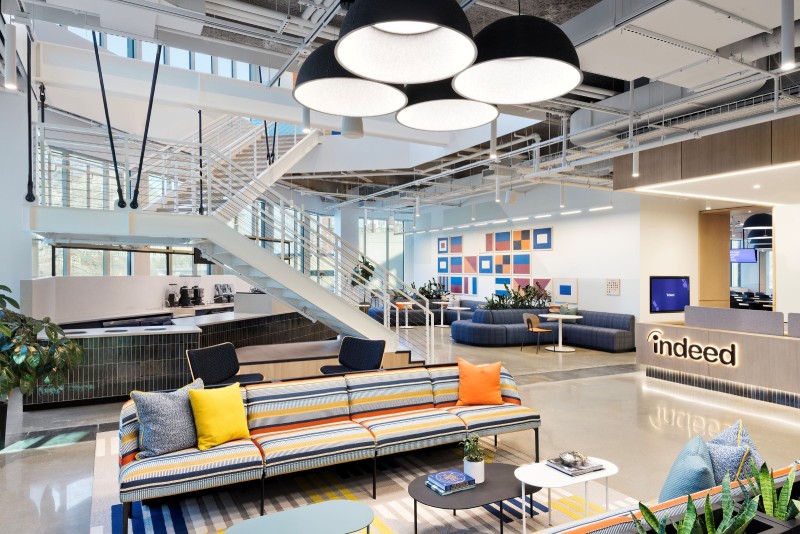
For Indeed, that question carried particular weight. The company is built around a clear and human mission: helping people get jobs. So, the workplace needed to do more than support daily tasks. It needed to help people feel the importance of that mission, share it with clients and come together around the collective work of the company.
Indeed’s Stamford office brought that ambition into an unusual architectural context: 125,000 square feet across a clock tower and an adjacent crescent-shaped building. The project needed to create a cohesive workplace ecosystem for marketing, sales, training and client-facing teams, while supporting everything from focused work to large-scale gatherings.
The design challenge was to be precise and thoughtful, so our team, working with Indeed, approached the project with a practical and strategic mindset, which pushed the team to make design decisions that were focused, memorable and meaningful. Rather than relying on expensive gestures everywhere, the design invests in the moments that matter most: arrival, gathering, training, dining and connecting.
These focus points became the strength of the project.
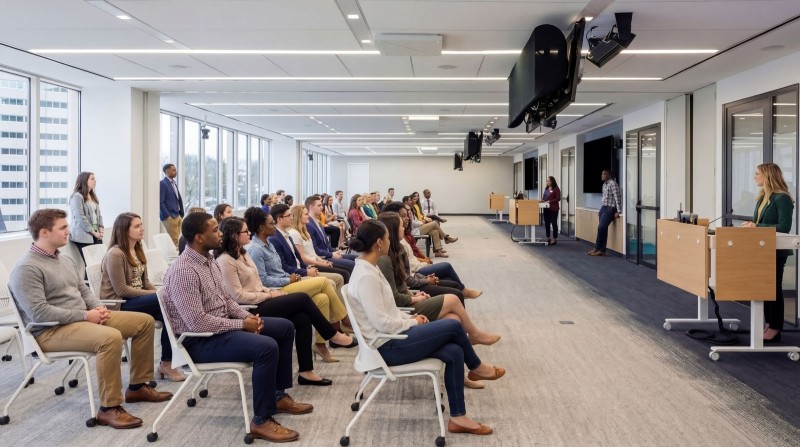
At the center of the workplace are spaces designed where people can be together. A multifunctional dining hall supports daily meals but can also become an all-hands venue. Training rooms accommodate 100-plus person events. Internal feature stairs connect training, dining, collaboration and workplace functions within Indeed’s secured environment. All of this supports the overall workplace strategy.
The stairs are especially important because connection cannot be theoretical in a workplace. It has to be visible and physical. You need to see people moving through the building. You need moments where teams cross paths naturally. You need a route that makes a workplace feel like one connected environment rather than a collection of separate destinations.
That is especially true for a hub, which is a location where people come together to embrace the collective life of a company: onboarding, training, client conversations, lunch, celebrations, informal coaching, and the conversations that happen before and after the meeting.
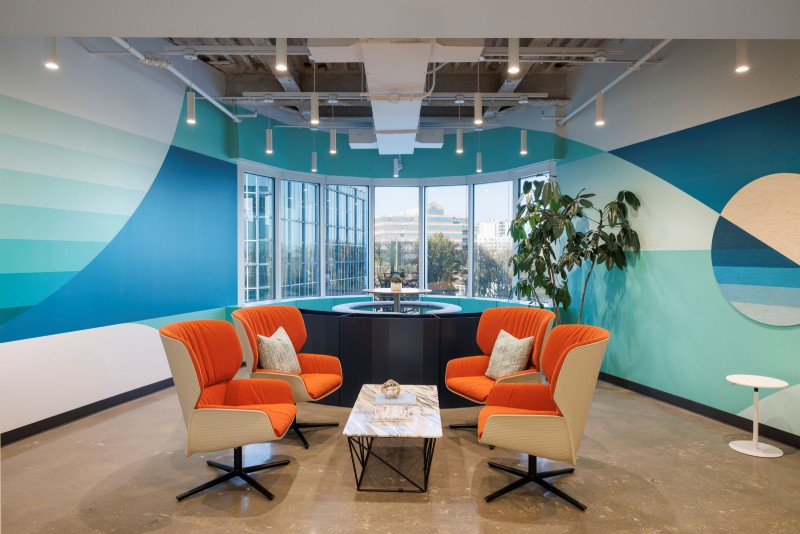
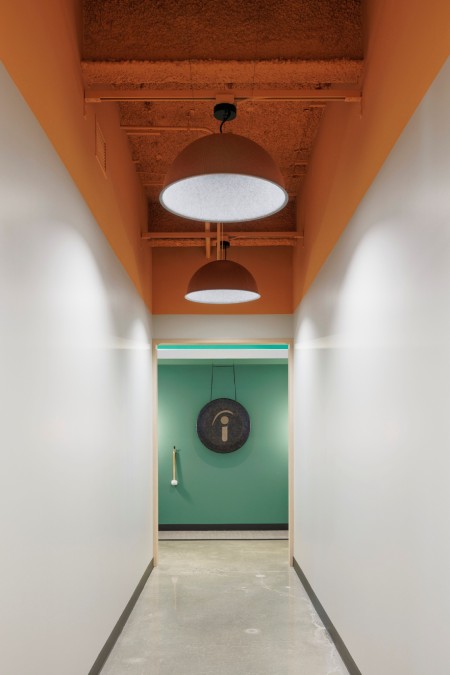
The design language came from Stamford itself. Research into the city’s history as a center of American Impressionism opened up a softer, more painterly approach to color. Nautical blues, greens, and warm oranges create an atmosphere that feels optimistic, timeless, and connected to place. The resulting graphics and color palette are local without being literal, expressive without feeling themed.
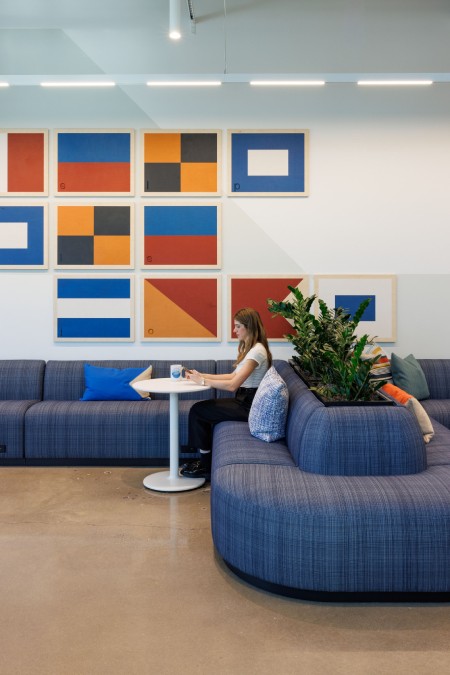
The maritime layer added another opportunity. Nautical signal flags became a way to encode Indeed’s mission, “We help people get jobs,” into the arrival experience. It is a simple statement, and that simplicity is powerful. The design does not try to overcomplicate it. Instead, it gives the mission a graphic and spatial presence: recognizable, memorable, and woven into the everyday experience of the office.
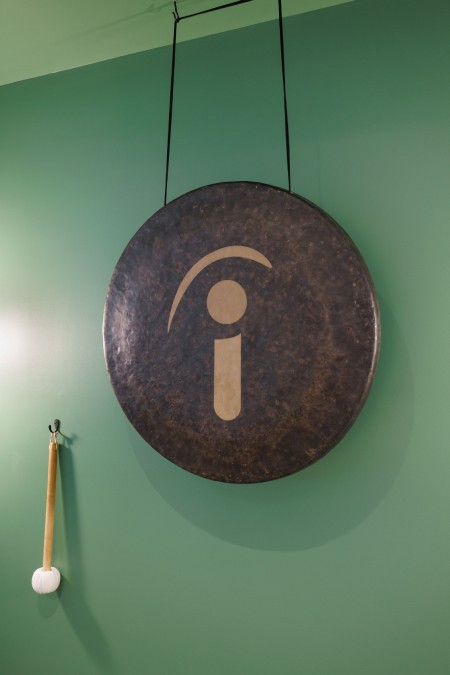
For Indeed Stamford, the result is a workplace that feels practical in the best sense of the word. It is built around use: people arriving, gathering, learning, eating, presenting, selling, focusing, and reconnecting. The design does not ask the office to become a fantasy version of work.
Instead, Indeed creates a space where people gather with purpose.

Editor’s Note: Brooks Morelock is a design director in Gensler’s New York office, focused on delivering highly complex workplace projects that unify design and strategy for some of the world’s most successful companies.